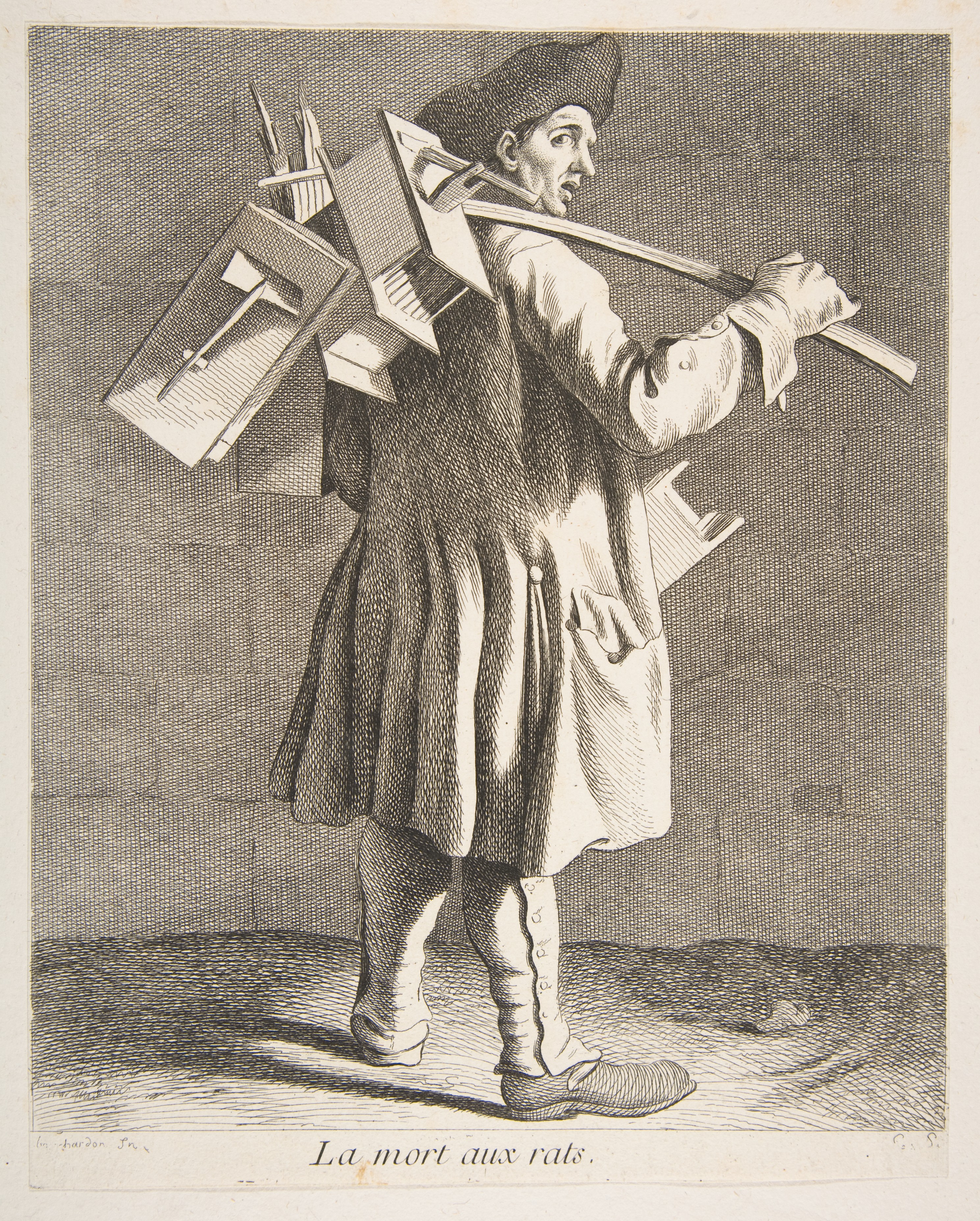
The Rat Catcher: A Study in Etched Materiality and the 2026 Silhouette
The figure of the Rat Catcher, long relegated to the margins of folklore and social history, emerges as a compelling subject for aesthetic archaeology within the context of Natalie Fashion Atelier. This archetype, a liminal wanderer whose trade is both necessary and reviled, offers a rich lexicon of form, texture, and narrative. Our investigation focuses on a singular, isolated artifact: an etching with some engraving, dated to the late 17th century, depicting a Rat Catcher in his occupational garb. This piece, stripped of its broader cultural context, becomes a pure object of study—a diagram of tension between utility and ornament, between the coarse and the refined. For the 2026 haute couture season, this etching informs a radical departure from the overtly opulent, guiding a silhouette defined by controlled asymmetry, functional drape, and the deliberate scarring of surface.
Deconstructing the Classical Elegance of the Rat Catcher
The classical elegance of this figure does not reside in conventional beauty, but in the poetry of function. The etching reveals a man whose clothing is a direct response to his environment. His coat, long and heavy, is not a garment of leisure but a shield against the filth of the sewers and the bites of his quarry. His hat, wide-brimmed and low, is a tool for shadow and concealment. The engraving technique, with its fine, deliberate lines, captures the worn texture of his leather jerkin and the frayed edges of his linen shirt. It is in these details—the patina of use, the geometry of necessity—that we find the seeds of a new elegance. The classical ideal is inverted: perfection is found not in pristine surfaces, but in the honest record of labor. The Rat Catcher’s silhouette is a study in verticality and volume, a long, lean torso punctuated by the bulk of a satchel or the flare of a boot. This is not a passive elegance; it is a dynamic, active form.
Materiality as Narrative: Etching and Engraving in Fabric
The chosen medium—etching with some engraving—provides the core technical lexicon for the 2026 collection. Etching, with its acid-bitten lines, suggests a process of controlled corrosion, while engraving, with its sharp, incised cuts, implies a meticulous, hand-driven precision. Translating this into haute couture materiality requires a rethinking of textile construction.
We propose a primary fabric: a double-faced wool crepe, treated with a proprietary laser-etching process. This technique, developed in collaboration with a Lyon-based textile atelier, will create a surface of variable depth and opacity. The laser will mimic the etching’s acid, burning away the top layer of fiber to reveal a contrasting under-layer, perhaps a fine metallic thread or a silk organza. The “engraving” will be achieved through hand-stitched structural seams, where thick, waxed linen thread is used to create raised, linear patterns that echo the engraver’s burin. These seams will not merely join fabric; they will scar and articulate the garment’s surface, creating a topography of labor. The result is a material that tells a story of creation through destruction, a fabric that wears its history on its face.
Informing the 2026 High-End Silhouette: The Functional Asymmetry
The Rat Catcher’s silhouette, as rendered in the etching, is inherently asymmetrical. The weight of his tools—the cage, the pole, the sack—pulls the fabric to one side, creating a dynamic, off-balance drape. For 2026, this translates into a silhouette we term “Functional Asymmetry.” This is not a decorative imbalance, but a structural one, dictated by the placement of pockets, closures, and weighted hems.
Consider the “Catch” coat: a long, single-breasted silhouette in the laser-etched wool crepe. The left side is cut longer and heavier, with a deep, hidden pocket designed to hold a single, weighted object—a functional counterpoise. The right side is shorter, with a high, asymmetric closure that uses a single, large horn button. The sleeve on the heavier side is cut with a dramatic, bell-shaped flare, while the other is lean and fitted. This asymmetry is not arbitrary; it is a direct translation of the Rat Catcher’s burden. The silhouette is grounded yet fluid, a garment that moves with the wearer’s body as a response to an unseen load.
The Silhouette of the Hunt: Verticality and the Tapered Form
The etching emphasizes a vertical, elongated line, a visual trick achieved by the Rat Catcher’s long coat and tall boots. For 2026, we distill this into a tapered, columnar silhouette that suggests both containment and release. The “Sewer” gown is a masterclass in this form. Constructed from a single, continuous panel of the engraved crepe, it is cut to fall straight from the shoulders to the mid-calf, where it is then cinched by a series of hand-stitched, ribbed seams that taper the fabric into a narrow, boot-like hem. This creates a silhouette that is armored and architectural, yet surprisingly soft in its movement. The top of the gown features a high, stand-away collar, reminiscent of the Rat Catcher’s protective neckwear, while the back is left open to the waist, revealing a lining of raw, unbleached silk—a nod to the linen shirt beneath the leather. The verticality is further emphasized by long, linear cuts—engraved slits—that run from the shoulder to the elbow, revealing glimpses of the body beneath, a controlled exposure that echoes the etching’s selective detail.
Texture and Patina: The New Luxury of Imperfection
The final pillar of the 2026 aesthetic is the celebration of patina. The etching captures the Rat Catcher’s clothing not as new, but as lived-in and worn. This is a radical departure from the pristine, untouched surfaces of classical couture. We will embrace deliberate distressing as a mark of authenticity. The laser-etching process will be used to create areas of controlled fading and fraying, mimicking the wear patterns seen on the Rat Catcher’s coat. Hand-stitched repairs—visible, contrasting threads—will be applied to seams and edges, transforming mending into ornamentation. Buttons will be sourced from antique horn and bone, each piece showing its own unique age. The luxury here is not in perfection, but in the honest narrative of use. A garment that appears to have been worn for a hundred years is a garment that carries the weight of a hundred stories. This is the new elegance: a silhouette that is not just worn, but inhabited.
The Rat Catcher, isolated from his historical context, becomes a pure archetype of functional beauty. His etched and engraved form, translated into the language of haute couture, offers a vision for 2026 that is bold, textured, and deeply human. The silhouette is no longer a static form, but a dynamic, asymmetrical, and patinated object, a testament to the enduring power of materiality and the poetry of the everyday.