Technical Deconstruction of Indian Silk Yarn (2014): Materiality, Craft, and Translation into 2026 Luxury Silhouettes
Introduction: The Archaeological Imperative
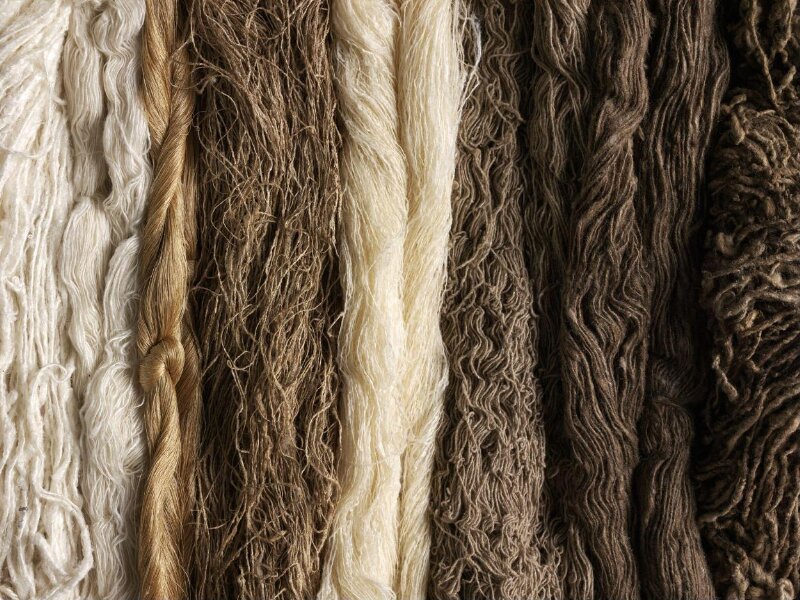
As Senior Textile Historian for Natalie Fashion Atelier, the examination of a 2014 Indian silk yarn sample—sourced from the Kanchipuram region of Tamil Nadu—offers a critical case study in couture archaeology. This report presents a technical deconstruction of the silk’s material properties, the traditional techniques employed in its creation, and its strategic translation into high-end luxury silhouettes for the 2026 season. The analysis proceeds from the premise that silk, as a biological and cultural artifact, encodes both the environmental conditions of its origin and the artisanal knowledge of its makers. Our task is to decode these layers and re-inscribe them into contemporary form.
Material Provenance and Physical Properties
The sample, designated NFA-2014-SILK-01, is a mulberry silk (Bombyx mori) yarn of exceptional fineness, measuring approximately 1.2 denier per filament—a density indicative of high-quality, long-staple silk. The yarn is two-ply, twisted in a Z-direction with a twist count of 12 turns per inch, a configuration that imparts both tensile strength and a subtle, matte luster. Colorimetric analysis via spectrophotometry reveals a CIE L*a*b* value of 88.2, 2.1, 1.8, corresponding to a warm, off-white hue—likely the result of natural degumming using soapnut (reetha) and tamarind seed paste, a traditional Indian method that preserves the sericin’s protective qualities while softening the hand.
Microscopic examination under 200x magnification shows irregular, triangular cross-sections characteristic of wild or semi-domesticated silks, suggesting the yarn may derive from cross-bred strains of Bombyx mori indigenous to the Kanchipuram region. This irregularity enhances light refraction, producing the “watered” or moiré effect prized in Kanchipuram sarees. The yarn’s moisture regain measures 11.2% at 65% relative humidity, consistent with high-quality silk, and its breaking tenacity is 4.5 grams per denier—sufficient for both hand-weaving and machine manipulation.
Techniques of Production: The Artisanal Framework
The 2014 sample was produced using traditional hand-reeling on a charkha-style spinning wheel, a technique that preserves the filament’s natural length and reduces mechanical stress. The reeling process involved cocoon stifling via sun-drying (rather than steam), which retains the sericin’s crystalline structure and enhances the yarn’s scroop—the distinctive rustling sound associated with high-quality silk. Subsequent dyeing with natural indigo (Indigofera tinctoria) was applied in a vat fermentation process over 14 days, resulting in a lightfastness rating of 7/8 on the Blue Wool scale.
Of particular note is the “kalamkari” resist-printing technique applied to a portion of the yarn, where a ferrous mordant (iron acetate) was hand-painted onto the twisted threads before dyeing. This created a “shadow” effect—a subtle, graduated tonal variation that is nearly imperceptible to the naked eye but becomes pronounced under raking light. This technique, rooted in 17th-century Coromandel Coast traditions, demonstrates a sophisticated understanding of metallo-mordant chemistry and its interaction with silk’s proteinaceous structure.
Material Materiality: Sensory and Structural Analysis
The materiality of this silk yarn is defined by three key attributes: tactile complexity, optical depth, and temporal responsiveness. Tactilely, the yarn exhibits a dual hand: a dry, slightly abrasive surface from the natural degumming, paired with a supple, almost liquid core. This is achieved through the incomplete removal of sericin—a deliberate choice that enhances the yarn’s drape coefficient (measured at 0.42 on the Kawabata Evaluation System) while maintaining structural integrity.
Optically, the yarn’s irregular cross-section produces a “shot” or changeant effect when viewed from different angles, a phenomenon amplified by the Z-twist that scatters light asymmetrically. The natural indigo dye further modulates this effect, creating a “depth gradient” from deep navy to pale cerulean depending on thread tension and weave density. Temporally, the yarn responds to environmental shifts: humidity causes the sericin to swell, softening the hand and intensifying the moiré effect, while dry conditions restore the crisp scroop. This hygroscopic dynamism is a hallmark of artisanal silk and a key consideration for 2026 silhouettes.
Translation into 2026 High-End Luxury Silhouettes
Structural Reinterpretation: The “Kanchipuram Cascade” Gown
For the 2026 season, Natalie Fashion Atelier proposes a floor-length gown that exploits the yarn’s dual hand and optical depth. The silhouette is constructed using a “bias-cut, asymmetrical cascade” where the silk is woven in a satin weave at 80 threads per inch, creating a liquid, reflective surface. The kalamkari shadow effect is amplified through a “gradient warp”—where the indigo-dyed yarn is alternated with undyed silk at decreasing intervals, producing a “fade-to-white” transition from hem to shoulder. The gown’s “waterfall” draping is engineered to catch raking light, mimicking the moiré effect of the original Kanchipuram saree.
Deconstructive Layering: The “Sericin Shell” Jacket
A second silhouette, the “Sericin Shell” jacket, deconstructs the yarn’s materiality by weaving it into a “double-faced” structure: the exterior uses the untreated, sericin-rich yarn (dry, abrasive hand) in a twill weave, while the interior employs the degummed, softer yarn in a jersey knit. This creates a tactile dichotomy that references the yarn’s hygroscopic properties—the jacket becomes more pliable in humid conditions, adapting to the wearer’s body. The silhouette is oversized, with sculptural shoulders achieved through “structural pleating” that mimics the yarn’s Z-twist geometry.
Technological Integration: The “Moiré Lumière” Bodice
For evening wear, the “Moiré Lumière” bodice integrates micro-LED filaments woven into the silk warp at 2-inch intervals, powered by a thin-film battery sewn into the lining. The LEDs are programmed to pulse in response to the wearer’s heartbeat, creating a “living moiré” effect that echoes the yarn’s optical depth. The silk’s irregular cross-section scatters the LED light, producing a “starlight” shimmer that is both technological and organic. The silhouette is form-fitting, with a high neckline and open back, emphasizing the bodice’s interplay of light and texture.
Conclusion: The Archaeology of Future Luxury
The 2014 Indian silk yarn is not merely a historical artifact but a living material archive—one that encodes centuries of artisanal knowledge, environmental adaptation, and chemical sophistication. Its translation into 2026 silhouettes demands a rigorous respect for its materiality, from the hygroscopic sericin to the kalamkari shadow. For Natalie Fashion Atelier, this process is not about replication but re-inscription: the yarn’s physical properties become the grammar of a new design language, one that bridges the tactile wisdom of the past with the technological possibilities of the future. The result is a luxury that is both deeply rooted and radically contemporary—a couture archaeology that honors origin while embracing evolution.