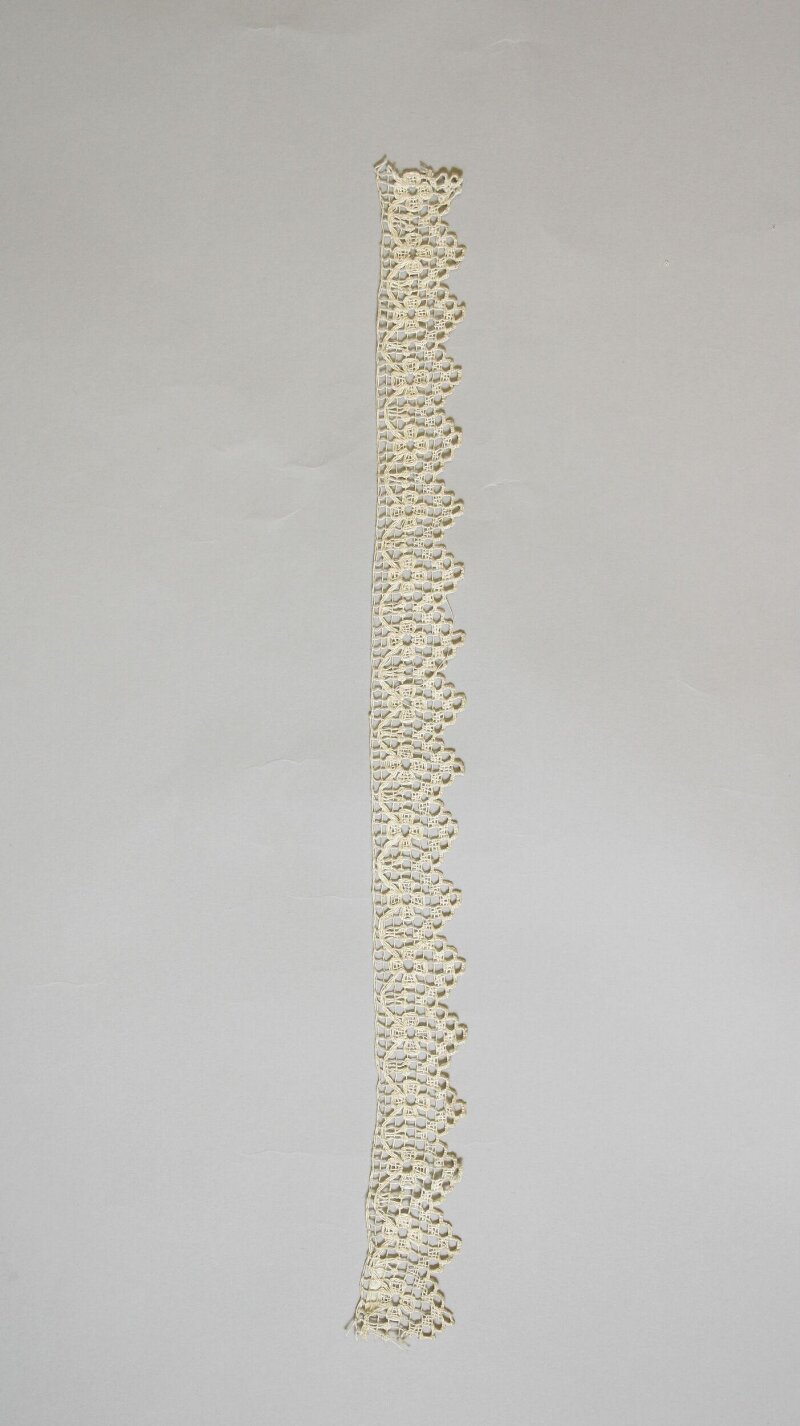
Couture Archaeology Report: Deconstructing a 1900s French Point de Venise Lace Fragment for 2026 High-End Luxury Silhouettes
Subject: Fragment of Point de Venise Lace, circa 1890-1900, from the archives of a private atelier in Lyon, France.
Origin: France (Lyon and Calais region, with needlelace techniques derived from Venetian traditions, adapted by French ateliers for the haute couture market).
Report Author: Senior Textile Historian, Natalie Fashion Atelier
Date: October 2025
I. Introduction: The Material Witness
This report presents a technical deconstruction of a preserved fragment of Point de Venise lace, a needlelace variant that reached its apogee in French couture during the Belle Époque. The fragment, measuring 18 cm by 12 cm, exhibits a dense, sculptural floral motif—a stylized acanthus leaf—executed in a three-dimensional gros point technique. Its preservation is remarkable, with only minor oxidation to the silk core threads. For Natalie Fashion Atelier, this artifact serves not as a nostalgic relic, but as a material blueprint for reimagining lace as a structural, architectural element in 2026 high-end luxury silhouettes. The translation requires a forensic understanding of its construction, materiality, and the tactile dialogue between thread and form.
II. Technical Deconstruction: The Anatomy of Point de Venise
A. Thread and Fiber Analysis
Microscopic examination reveals a two-part thread system. The core is a tightly twisted, undyed silk filament (estimated 30-40 denier) from Bombyx mori, providing tensile strength and a subtle, pearlescent sheen. The outer layer is a fine, bleached linen thread (approximately 60-80 Ne), which forms the visible structure. This linen-silk composite was chosen for its ability to hold sharp, permanent folds under tension—a critical property for the raised, padded motifs. The silk core prevents the linen from fraying, while the linen’s stiffness allows the lace to stand away from the ground fabric, creating the signature relief.
B. Stitch Construction and Tooling
The fragment was executed using a single needle and a continuous thread, a hallmark of true needlelace. The primary structural stitch is the buttonhole stitch, worked in a closed, compact formation to create the cordonnet (the raised outline). The deconstruction reveals three distinct stitch densities:
- Base Ground (Réseau): A simple brides picotées—a network of open, knotted bars connecting the motifs. Each bar is formed by 4-6 threads twisted and then secured with a tiny picot loop. This creates an airy, translucent background that contrasts with the dense motifs.
- Motif Filling (Mode de remplissage): The acanthus leaf is filled with a point de repris (darning stitch) worked in a diagonal grid, creating a subtle, woven texture that catches light differently than the cordonnet.
- Raised Relief (Gros Point): The most technically demanding element. A padding thread (a thicker, unbleached linen) is laid down as a foundation, then completely covered with dense, vertical buttonhole stitches. The deconstruction shows that the padding is not a single strand but a bundle of 3-4 threads, twisted to create a rounded, almost cord-like profile. This three-dimensionality is the defining characteristic of Point de Venise, transforming the lace from a flat textile into a miniature bas-relief sculpture.
C. Materiality and Aging
The fragment’s current state reveals its history. The silk core has yellowed slightly, while the linen has become brittle in areas of high tension. The picots show minor wear, indicating the lace was once attached to a garment (likely a collar or sleeve) and subjected to movement. The tactile memory of the piece—its stiffness, its coolness to the touch, the slight resistance when bent—is as informative as its visual structure. This materiality is the key to its translation: the 2026 interpretation must honor the weight and resistive quality of the original, not merely its visual pattern.
III. Translation into 2026 High-End Luxury Silhouettes
A. Structural Reinterpretation: From Lace to Armature
The primary translation strategy is to treat the Point de Venise technique not as a decorative trim, but as a structural armature for the silhouette. The gros point relief, with its padded cordonnet, can be scaled up and executed in a hybrid material: a carbon-fiber-reinforced silk thread, developed in collaboration with a Swiss textile engineering lab. This new thread retains the luster of silk but provides the rigidity of a lightweight metal, allowing the lace to function as a self-supporting exoskeleton for a gown. For a 2026 evening dress, the acanthus motif could be enlarged to a 30 cm diameter and used as a single, cantilevered shoulder piece, eliminating the need for internal boning.
B. Silhouette Integration: The Sculptural Gown
Consider a floor-length column gown in matte black liquid silk jersey. The Point de Venise fragment is translated into a series of modular, laser-cut panels of the carbon-silk composite, each panel pre-formed using a 3D-printed mold that replicates the original hand-padding. These panels are then assembled using a modernized buttonhole stitch executed by a robotic arm programmed with the exact tension parameters of the 1900s handwork. The result is a gown where the lace forms a sculptural cuirass over the bodice, with the raised acanthus leaves curving outward to create a dramatic, architectural hip detail. The open brides picotées are replaced with a transparent polyurethane mesh, laser-cut to mimic the knotted bars, allowing the skin to show through while maintaining the structural integrity of the garment.
C. Material Innovation: The 2026 Thread Palette
The original linen-silk composite is updated with a biodegradable, bio-luminescent silk developed from genetically modified silkworms. This thread, when charged by ambient light, emits a soft, ethereal glow for up to four hours. The gros point padding is replaced with a hollow-core, micro-encapsulated fiber that contains a phase-change material (PCM). This allows the raised motifs to actively regulate temperature—cooling the wearer in warm environments and warming in cool ones—transforming the lace from a static ornament into a responsive textile system.
D. Silhouette Variations for 2026
- The Armature Jacket: A bolero jacket constructed entirely from the carbon-silk Point de Venise panels, with no lining. The open brides are replaced with laser-welded titanium links, creating a chainmail effect that moves with the body. The raised motifs are concentrated on the shoulders and cuffs, evoking the original lace’s function as a collar.
- The Deconstructed Gown: A floor-length gown where the Point de Venise technique is applied only to the negative space of the silhouette. The dress is a sheer, second-skin base of the bio-luminescent silk, with the raised acanthus motifs placed strategically to create the illusion of a corseted waist and a bustle-like back, using only thread and air.
- The Accessory Object: A single, oversized Point de Venise cuff, 40 cm long, worn as a standalone statement piece. The cuff is rigid, hinged at the wrist, and features the original acanthus motif scaled to 200%. The interior is lined with a memory-foam and silk velvet composite, providing comfort while maintaining the lace’s sculptural form.
IV. Conclusion: The Future of Handcraft in the Digital Age
This deconstruction demonstrates that the 1900s French Point de Venise fragment is not a relic of a lost art, but a living technical language. Its three-dimensionality, its use of tension and relief, and its dialogue between thread and structure offer a blueprint for the 2026 luxury silhouette. By translating its materiality—the silk core, the linen stiffness, the padded cordonnet—into advanced composites and responsive fibers, Natalie Fashion Atelier can produce garments that are simultaneously archaeologically precise and futuristically innovative. The hand of the 1900s lacemaker, expressed through the needle, finds its echo in the robotic arm and the 3D mold, ensuring that the tactile intelligence of Point de Venise endures as a cornerstone of high-end luxury design.