Couture Archaeology Report: A Technical Deconstruction
Subject: The 'Jules' Evening Ensemble
Origin: Yves Saint Laurent, Haute Couture Autumn/Winter 1974 Collection
This report presents a technical deconstruction of the 'Jules' evening ensemble from Yves Saint Laurent's (YSL) Autumn/Winter 1974 Haute Couture collection. Our analysis focuses on the intersection of materiality, construction, and silhouette, with the objective of extracting core principles for translation into the Natalie Fashion Atelier 2026 high-end luxury lexicon. The chosen garment is not merely a period piece but a masterclass in structured fluidity, a paradox that holds significant relevance for the future of luxury dressing.
Technical Deconstruction & Materiality
The 'Jules' ensemble is a study in deliberate contrasts, built upon a foundation of rigorous tailoring typically reserved for masculine suiting, yet executed to create a profoundly elegant, feminine form. The analysis breaks down into three core components.
1. The Tailored Jacket: Architecture in Wool Velvet
The jacket is the structural heart of the ensemble. Its material, a heavyweight wool velvet, is critical. Unlike lighter silk or cotton velvets, wool velvet possesses a dense pile and substantial body, allowing it to hold a shape while retaining a soft, luminous surface. The construction reveals a fully canvassed interior, with a horsehair chest piece and structured shoulders that impart a subtle, authoritative breadth. The genius lies in the suppression and drape. The pronounced peplum is not an added flounce, but an integral part of the jacket's architecture, achieved through precise darting and seaming that redirects the fabric's flow from a fitted torso into a soft, flared skirt. The notched lapels, precise welt pockets, and metal button closures are all executed with the exactitude of Savile Row, yet the sum is undeniably, luxuriously feminine.
2. The Silk Crepe de Chine Blouse: Engineered Softness
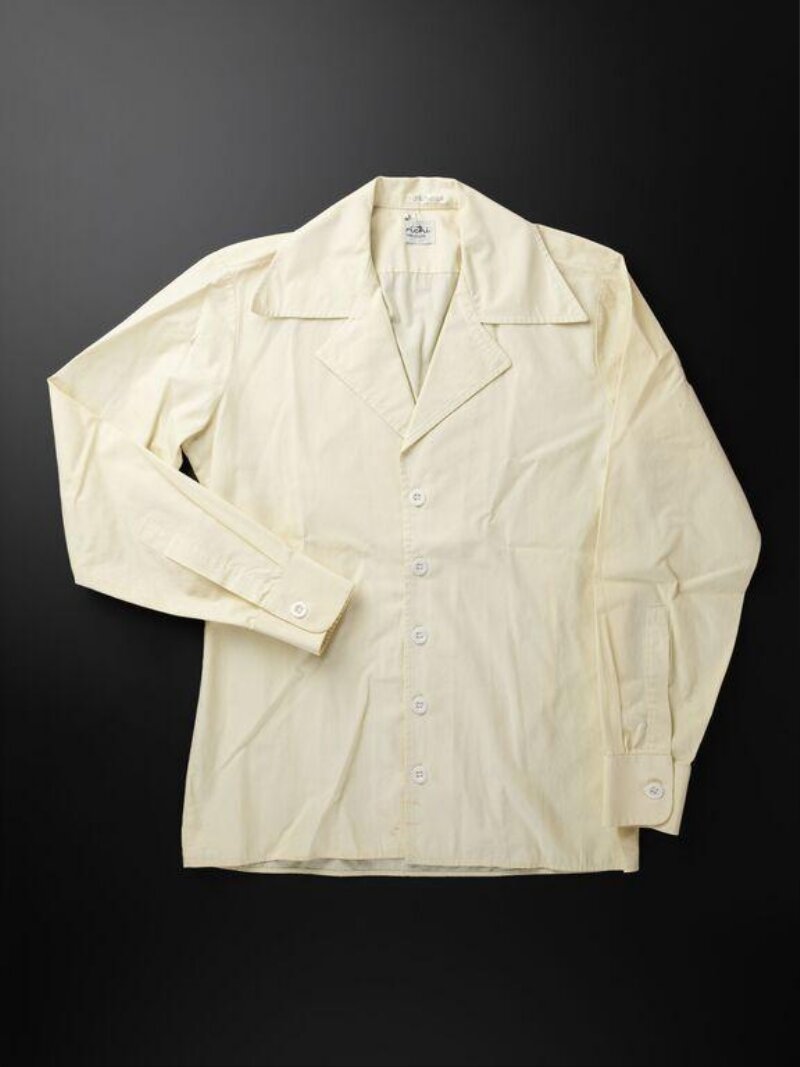
Beneath the structured exterior lies the blouse, cut from pure silk crepe de chine. This fabric choice is strategic. Its fluid, slightly textured matte finish provides a tactile and visual counterpoint to the plush, light-absorbing velvet. The blouse's technique is one of engineered softness. The iconic draped neck tie is not a separate piece but is cut on the bias as an extension of the front panels, allowing for a cascade of fabric that appears effortless but is anchored by precise internal stitching to control volume and fall. The sleeves are cut with ample ease, gathering softly into narrow cuffs—a detail that references masculine shirtmaking but subverts it through volume and delicate fabric.
3. The Trousers: The Silent Revolution
The wide-leg, high-waisted trousers complete the silhouette's modernity. Cut in the same wool velvet, they provide continuity of materiality. Their construction is deceptively complex. The wide leg is achieved not through excessive flare, but through a generous, consistent circumference from thigh to hem, requiring significant fabric width and impeccable hanging lines to avoid bulk. The high waist is structured with interior waistband interfacing to smooth the torso, while the front pleats (a nod to masculine tailoring) are meticulously pressed and stitched down partially to manage release and maintain a clean line over the hip. This creates a silhouette of powerful, uninterrupted verticality.
Archaeological Insights for 2026 Translation
The 1974 'Jules' ensemble offers a blueprint for 2026 luxury that values intellectual elegance, material integrity, and transformative silhouettes. The translation is not one of replication, but of extracting and evolving its core principles.
Principle 1: Paradoxical Materiality
2026 Application: We must champion fabrics with inherent intelligence and contrast. Imagine the YSL wool velvet reimagined as a bi-phase technical velvet—perhaps a blend of certified extra-fine merino with a recycled filament core for structural memory, or a plant-dyed velvet with a thermo-regulating finish. The silk crepe de chine could be translated into peace silk or lab-grown silk alternatives with enhanced durability, or into innovative matte jerseys with natural stretch. The principle is the dialogue: structured yet plush, fluid yet defined.
Principle 2: Silhouette as Emotional Architecture
The 'Jules' silhouette is empowering and protective yet romantic. For 2026, we deconstruct this further. The peplum jacket's architecture can be abstracted—morphed into integrated hip wings, asymmetrical draped panels emerging from a tailored spine, or a detachable structured basque. The wide-leg trouser can evolve into an engineered palazzo pant with internal suspension systems (fine cords or flexible boning) to perfect the drag and flare, or be hybridized with a skirt to create a modern culotte of extreme volume. The goal is to create garments that sculpt the body's perception in space, offering both sanctuary and statement.
Principle 3: The Couture Hand in the Tech Age
The 1974 construction relied on hand-padding, bias-cutting, and meticulous finishing. In 2026, these techniques are not obsolete but are enhanced and made visible. Imagine internal structures made with laser-cut, biodegradable flexible polymers, mapped to the body's pressure points. Seam allowances could be finished with ultrasonic welding for a clean, weightless edge, while selective areas are hand-embroidered with conductive threads for subtle, interactive luminescence. The draped neck tie could be pre-moulded using advanced fabric-forming techniques, then finished by hand. The atelier's hand becomes the curator of advanced technology.
Conclusion: The 2026 Prototype Vision
Drawing from this couture archaeology, a proposed 2026 Natalie Atelier silhouette emerges: The 'Neo-Jules' System. It features a jacket in a carbon-negative, dense bio-velvet, structured with a 3D-knitted internal mesh that allows the peplum to hold its shape yet collapse flat for travel. Beneath, a top in algae-derived silk substitute features a bias-draped front that is pre-formed but adjustable via magnetic closures. The trousers, in the same bio-velvet, incorporate a hidden, weight-supporting waistband and are cut to interface seamlessly with platform footwear, creating an unbroken line.
The 1974 YSL 'Jules' ensemble was a manifesto of modern femininity built on the bedrock of traditional craft. For 2026, the mandate is to build upon that bedrock with the tools, materials, and consciousness of a new era, creating luxury that is as intellectually rigorous and emotionally resonant as its archaeological inspiration. The future of silhouette lies in this deep, technical dialogue with the past.