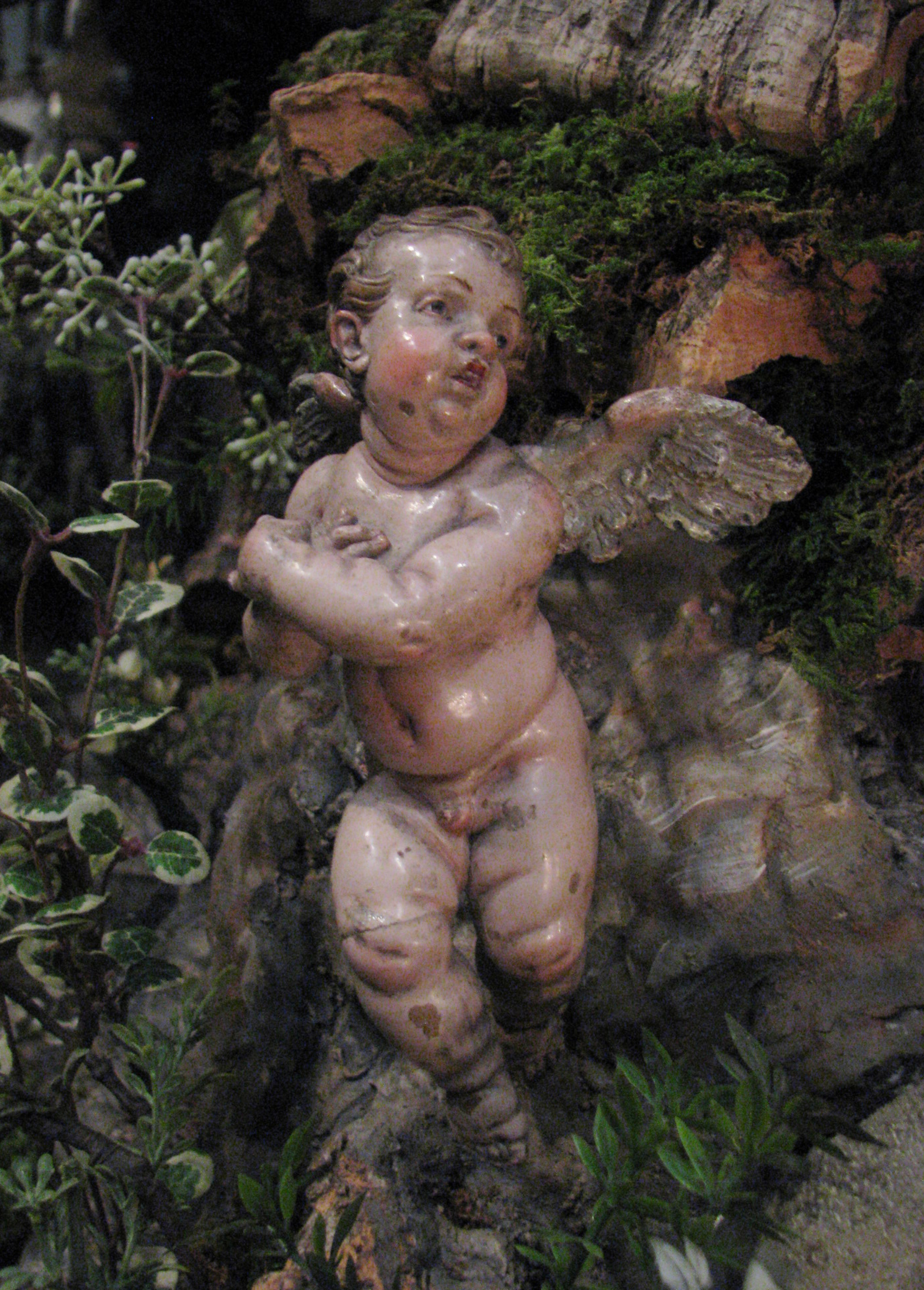
Polychromed Terracotta: An Archaeological Deconstruction of the Cherub for 2026 Haute Couture
The cherub, a motif rooted in classical antiquity and Renaissance sacral art, presents a paradox for the contemporary couturier. Within the isolated context of aesthetic archaeology, the cherub is not merely a decorative putto but a study in volumetric tension, kinetic stillness, and material illusion. At Natalie Fashion Atelier, we approach this figure not through the lens of religious iconography, but as a sculptural blueprint for high-end silhouettes. The primary artifact under analysis is a polychromed terracotta cherub from the 16th-century Florentine school—a medium that inherently dictates a dialogue between raw earth and refined pigment. This paper deconstructs the classical elegance of this artifact and translates its material and formal principles into a rigorous framework for 2026 luxury silhouettes.
I. The Material Dialectic: Polychromed Terracotta as Structural Precedent
Terracotta, literally “baked earth,” is a medium of compression and fragility. Its polychromy—the layering of tempera or oil-based pigments over a gesso ground—introduces a second skin. In the cherub, this skin is not merely decorative; it is a narrative of surface tension. The underlying clay provides a soft, organic volume, while the painted surface defines musculature, shadow, and light. For 2026, this duality informs a critical design principle: the silhouette must read as a monolithic volume that is then articulated by pigment and texture.
Consider the cherub’s characteristic contrapposto—a slight torsion in the torso that creates a dynamic S-curve. The terracotta medium forces this gesture to be both fluid and grounded. In haute couture, this translates to a silhouette that appears to be carved from a single block of fabric, yet possesses the kinetic potential of a living form. We propose a “terracotta cut” for 2026: a garment constructed from a continuous length of double-faced wool or bonded silk, where the internal structure is entirely hidden, and the external form is defined by negative space—much like the spaces between a cherub’s chubby limbs. The armhole, for instance, becomes a void that defines the volume of the sleeve, echoing the sculpted gap between a cherub’s wing and shoulder.
II. Polychromy as Architectural Layering: The 2026 Palette
The polychromy of these terracotta artifacts is rarely naturalistic. The flesh tones are often a warm, burnt sienna, the wings a lapis lazuli blue, and the hair a gilded ochre. This is not a representation of reality but a hierarchical color system that directs the eye across the sculpture. For the 2026 silhouette, we extract a principle of chromatic stratification. The base silhouette—the “terracotta”—is a neutral, earth-bound hue: raw umber, clay beige, or deep terra verde. Upon this foundation, appliqués, embroidery, and painted leather panels are applied in the manner of polychrome layers. These are not random embellishments but structural pigments that define the garment’s anatomy.
A key technical application is the “gesso collar”—a high, sculpted neckline that extends into a wing-like shoulder. This element is constructed from a stiffened organza or a molded resin-coated silk, then hand-painted with a gold leaf and vermillion pattern that mimics the cherub’s gilded hair. The collar does not merely sit on the garment; it emerges from it, as if the terracotta has been cracked to reveal a polychromed interior. This technique directly references the craquelure often found in aged terracotta, where the paint layer separates from the clay, creating a micro-topography of color and shadow.
III. The Cherub’s Anatomy: Volumetric Silhouette for 2026
The cherub’s anatomy is characterized by exaggerated proportions: a large head, rounded belly, and short, pudgy limbs. This is not a realistic human form but an idealized, symbolic one. For high-end silhouettes, this suggests a departure from the hyper-slim, elongated lines of recent decades. Instead, we advocate for a “putto proportion”: a collection of distinct, rounded volumes that are assembled into a coherent whole. The 2026 silhouette is not about shrinking the body but about sculpting the garment around the body’s natural mass.
Consider the following technical applications:
- The “Cherub Sleeve”: A short, puffed sleeve that is not gathered at the cap but is instead molded using a combination of horsehair canvas and internal boning. The sleeve appears as a solid, spherical volume that tapers abruptly at the elbow, mimicking the cherub’s upper arm. The hem is finished with a polychromed edge—a band of painted silk that echoes the painted cuff of a Renaissance cherub’s tunic.
- The “Putto Bodice”: A corseted structure that is not cinched at the waist but instead creates a continuous, rounded torso from shoulder to hip. The boning is arranged in a radial pattern—like the rays of a halo—to create a dome-like silhouette. The surface is then treated with a terracotta wash: a thin application of clay-based pigment that gives the fabric a matte, earthen finish.
- The “Winged Back”: A dramatic, architectural extension of the shoulder blades. The wings are not literal feathers but are constructed from layered, laser-cut leather that has been hand-painted with a gradient of ultramarine to gold. These wings are attached to the garment at a single pivot point, allowing them to articulate with the wearer’s movement—a kinetic echo of the cherub’s frozen flight.
IV. Surface Treatment: From Craquelure to Couture
The surface of the polychromed terracotta cherub is a record of time: the crack lines, the flaking pigment, the subtle indentations of the artist’s tools. For 2026, we propose a “patina finish” as a deliberate design element. This is not a distressed or deconstructed look but a controlled aging that adds depth and narrative to the fabric.
Techniques include:
- Lacquer crackling: A topcoat of clear lacquer is applied over a matte base, then subjected to a controlled heat treatment to create fine, hairline cracks. The cracks are then filled with a contrasting pigment—gold, silver, or a deep umber—to mimic the gilding in the cracks of an aged terracotta.
- Hand-painted shadows: Using a technique derived from fresco painting, shadows are painted directly onto the fabric using a dry brush and a pigment mixed with a resin binder. This creates a chiaroscuro effect that gives the silhouette a three-dimensional, sculptural presence.
- Inlaid terracotta beads: Small, hand-formed terracotta beads are fired and then polished. These are inlaid into the fabric using a technique of cutwork and stitching, creating a tactile, mosaic-like surface that references the cherub’s polychrome tiles.
V. Conclusion: The Cherub as a Prototype for 2026 Luxury
The polychromed terracotta cherub, isolated from its original sacral context, becomes a prototype for a new kind of luxury. It teaches us that elegance is not found in austerity but in the mastery of volume, color, and surface. For 2026, the haute couture silhouette must not merely clothe the body; it must sculpt the space around it, creating a presence that is at once ancient and radically new. The cherub’s chubby limbs, its painted wings, its earthen core—these are not relics but blueprints. At Natalie Fashion Atelier, we do not replicate the cherub; we excavate its principles and re-embed them in the fabric of the future. The result is a silhouette that is heavy with history, yet light with the possibility of flight.