The Golden Pheasant and the Architecture of Prestige: A Couture Artifact for 2026
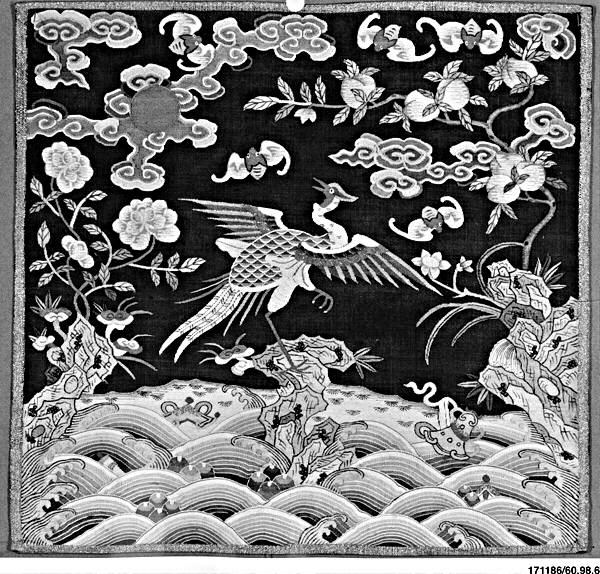
Within the hushed corridors of Natalie Fashion Atelier’s archival vault, a singular object commands attention—not through volume, but through the meticulous precision of its symbolic weight. The Rank Badge with Golden Pheasant, a relic of China’s imperial Qing dynasty, is not merely a textile; it is a codified system of power rendered in silk and metallic thread. This artifact, isolated through the lens of aesthetic archaeology, offers a profound lexicon for the 2026 haute couture silhouette. By deconstructing its structural grammar, material hierarchy, and chromatic discipline, we extract principles that transcend ornamentation, informing a new paradigm of luxury that is both authoritative and ethereal.
I. Aesthetic Archaeology: Unearthing the Grammar of Status
The rank badge, or bufang, was a square of embroidered silk worn on the surcoat of civil and military officials, with the golden pheasant signifying the second-rank civil servant. Its placement—centered on the chest and back—was deliberate, creating a visual axis of authority. For the contemporary atelier, this is not a historical footnote but a blueprint for silhouette construction. The 2026 collection will not borrow the bird’s literal form; instead, we extract its principle of centralized insignia. The modern interpretation manifests as a structural focal point: a sculpted basque waist, a sharply defined peplum, or an asymmetric panel of metallic brocade that anchors the torso, drawing the eye to the wearer’s core as the epicenter of presence. The silhouette becomes a carrier of narrative, where the garment’s architecture—not its appliqué—communicates rank and refinement.
II. Materiality as Message: Silk and Metallic Thread
The artifact’s dual materiality—lustrous silk ground and rigid metallic thread—creates a dialectic of softness and strength. The silk, often a deep indigo or sapphire, provides a fluid, almost liquid base, while the gold-wrapped threads (traditionally gilded paper or silk-core) are couched in dense, raised relief. This juxtaposition is the core of its tactile luxury. For 2026, Natalie Fashion Atelier translates this into a dual-fabric construction that defines the silhouette’s very form. Consider a floor-length gown where the primary shell is a fluid, matte silk charmeuse, draping with deceptive ease. The structural counterpoint arrives via a gilet or corseted overlay in Lurex-woven jacquard, echoing the metallic thread’s rigidity. This overlay is not decorative; it is engineered to cinch, support, and project the torso forward, creating a modern corps piqué. The tension between the yielding silk and the unyielding metal thread becomes a metaphor for the contemporary woman—fluid in movement, unassailable in intent.
III. Chromatic Discipline and the Luminescence of Power
The palette of the original badge is austere and deliberate: deep, almost black blues, set against the incandescent gold of the pheasant and the subtle silver of cloud motifs. There is no chromatic noise. This restraint is a masterclass in luxury through limitation. The 2026 silhouettes will adopt this disciplined palette, but with a modern, technical twist. We introduce photochromic silk—a fabric that shifts subtly from midnight ink to a deep peacock blue under changing light—and burnished metallic organza that catches light in fractured, jewel-like fragments. The silhouette’s power emerges from this controlled luminosity: a tailored tuxedo jacket with a high, Mandarin-inspired collar, executed in matte black silk, is interrupted by a single, sweeping panel of gold-threaded tulle that cascades from the shoulder, mimicking the pheasant’s plumage. The effect is not costume; it is the abstraction of radiance, a quiet proclamation of status that relies on material science rather than overt embellishment.
IV. The Silhouette of 2026: From Flat Badge to Sculptural Form
The rank badge is a two-dimensional object, yet its visual weight creates an illusion of three-dimensionality. Our 2026 silhouettes will literalize this illusion through architectural draping and negative space. The first key piece is the “Bufang” Gown: a columnar silhouette in heavy silk faille, where the bodice is constructed with a series of concentric, hand-stitched tucks that radiate from the sternum, echoing the concentric waves and clouds of the original badge. These tucks are not merely decorative; they are engineered to create a subtle, sculptural relief that casts shadows, giving the flat fabric a volumetric presence. The second piece is the “Pheasant Tail” Overcoat: a sharp, double-breasted silhouette in metallic-thread brocade, but with a radical deconstruction—the back panel is cut away and replaced with a waterfall of raw-edged silk fringe, each strand tipped with a micro-crystal. This movement recalls the pheasant’s trailing tail feathers, but in a form that is kinetic, modern, and defiantly non-literal. The silhouette’s line is maintained by the rigid front, while the back dissolves into motion, embodying the tension between control and release.
V. Craftsmanship as a Continuum: The Atelier’s Imperative
Finally, the artifact demands a reverence for process. The original badge required hundreds of hours of couching, where each metallic thread was individually laid and secured. This is the antithesis of fast fashion. For 2026, Natalie Fashion Atelier will resurrect this slow-couture methodology in a limited capsule of twelve pieces. Each garment will feature a hand-embroidered element—not a literal pheasant, but an abstracted geometric pattern derived from the badge’s cloud-collar motif—executed in gold and silver bullion thread on a base of silk gazar. This embroidery is not an appliqué; it is integrated into the garment’s seams and darts, reinforcing the structure while adding a tactile, jewel-like surface. The result is a silhouette that is not just worn but inhabited, a modern heir to the imperial badge’s legacy. The 2026 collection does not reference history; it re-engineers its principles of power, materiality, and restraint into a new form of Parisian elegance—one that is intellectually rigorous, technically sublime, and unmistakably of its time.