The Lion’s Gaze: Etruscan Gold and the Architecture of 2026 Silhouettes
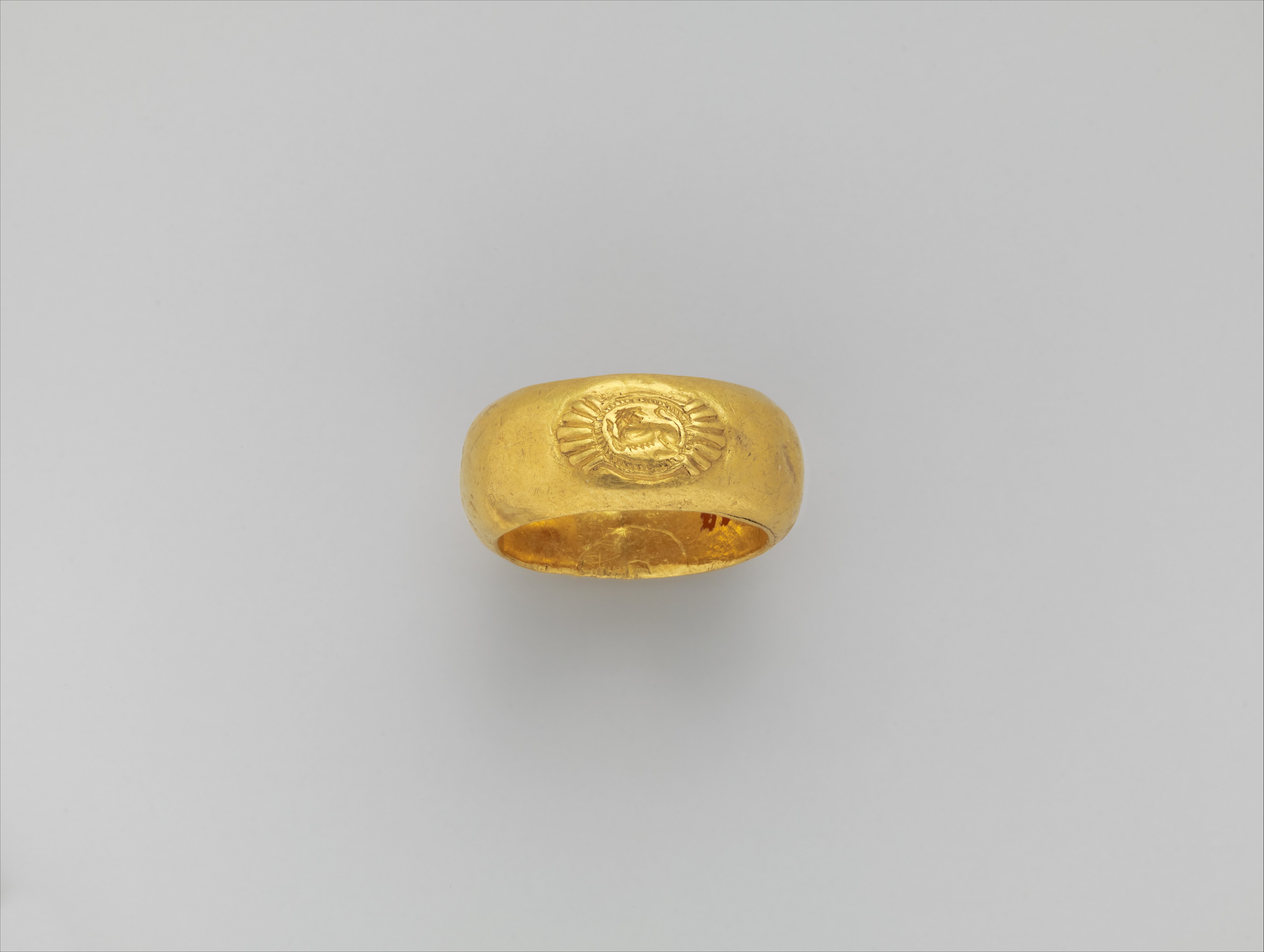
Within the hallowed archive of Natalie Fashion Atelier, the study of a singular artifact—a gold ring bearing a lion on its bezel, attributed to the Etruscan civilization—offers more than a mere historical footnote. It presents a masterclass in compressed power, a dialogue between metallurgical restraint and symbolic ferocity. The Etruscan goldsmith, working circa the 5th century BCE, did not merely adorn; he engineered a micro-architecture of authority. For the 2026 haute couture collection, this ring serves as a foundational blueprint, informing a silhouette language that prioritizes structural tension, tactile gravitas, and the quiet roar of ornamentation.
I. Deconstructing the Bezel: From Granulation to Gaze
The bezel of the ring is not a flat surface but a relief map of dominance. The lion, rendered in repoussé and granulation, is captured mid-stride, its mane a constellation of minute gold spheres. This is not the heraldic, static lion of later medieval iconography; it is an Etruscan beast, alive with the horror vacui of its era, yet disciplined by the circular confines of the ring’s frame. The technical mastery lies in the micro-contrast: the polished, smooth gold of the inner band against the textured, almost abrasive surface of the bezel. This duality—of friction and flow—is the first principle we extract for 2026.
1.1 The Principle of Encapsulated Ferocity
In translating this to the couture silhouette, we reject the literal reproduction of a lion motif. Instead, we adopt the structural logic of the bezel: a powerful, concentrated focal point held within a disciplined, flowing frame. For 2026, this manifests in the Col Roule Encapsulé—a high, sculptural neckline that appears to “clasp” the wearer’s throat, constructed from rigid, molded horsehair canvas and finished with a single, oversized gold-tone clasp. The silhouette of the garment is deliberately minimal, a column of fluid crepe or silk gazar, allowing the neckline to function as the bezel. The ferocity is not in the print or embroidery, but in the architectural grip of the collar itself. It is a silent, powerful statement of self-possession, echoing the ring’s function as a seal of authority.
1.2 Granulation as Textural Memory
The Etruscan technique of granulation—applying thousands of microscopic gold spheres to a heated surface—creates a surface that catches light in a million discrete points. This is not a glitter; it is a diffused, granular luminescence. For the 2026 atelier, we translate this into tactile surface treatments on evening wear. Consider a gown of deep aubergine silk velvet, where the bodice is entirely hand-embroidered with tiny, matte gold sequins, each one individually applied and burnished to a slightly different angle. The effect is not a mirror-shine but a granular absorption and reflection, mimicking the ring’s bezel. The silhouette remains severe—a sheath with a slight train—but the surface becomes the narrative. The garment does not shout; it vibrates with a thousand quiet assertions, demanding close inspection, exactly as the ring demands to be turned in the hand.
II. The Archive Dialogue: Mirror and Stone
The archive context provided—the juxtaposition of the Mirror with Split-Leaf Palmettes and the relief-carved sarcophagus—is not incidental. It frames our Etruscan ring within a broader philosophical tension: the ephemeral reflection versus the permanent entombment. The mirror, with its bright gold inlay on silver, speaks to vanity, to the fleeting image. The sarcophagus speaks to legacy, to the carved narrative that outlasts the body. The ring, worn on the hand, exists in both realms: it is a reflective object in daily life, yet its lion is a funerary guardian, a promise of enduring power.
2.1 The Dual-Faced Silhouette
This duality directly informs the 2026 Silhouette Janus—a concept where the front and back of a garment tell different stories. The front, inspired by the mirror, is clean, polished, and almost severe: a high-necked, long-sleeved column in liquid satin, devoid of ornament. The back, however, is the sarcophagus. It erupts into a bas-relief of sculptural draping, with folds and tucks that mimic carved stone, anchored by a single, heavy gold chain that traces the spine. The wearer presents a composed, reflective facade, but upon turning, reveals a narrative of depth and history. This is the archaeological reveal, a signature move for the coming season, where the unexpected is not in color or print, but in the three-dimensional construction of the garment’s rear architecture.
2.2 Gold as Structural Ligament
In both the ring and the archive objects, gold is not merely applied; it is a load-bearing element. In the mirror, the gold palmettes hold the reflective silver in place. In the ring, the gold band is the tension that keeps the lion’s bezel secure. For 2026, we apply this principle to garment engineering. Gold is no longer just a thread or a trim; it becomes a functional exoskeleton. We introduce armatures—thin, flexible gold-plated brass wires—that are woven into the seams of tailored jackets and gowns. These armatures allow the fabric to hold a shape that defies gravity, creating a cantilevered shoulder or a floating peplum that would otherwise collapse. The gold is invisible, yet it is the sinew of the silhouette. This is the ultimate luxury: the invisible hand of the goldsmith guiding the drape of the couturier.
III. The 2026 Lion: A New Posture of Power
The lion of the Etruscan ring is not roaring; its mouth is closed, its gaze forward. It is a contained, predatory calm. This posture redefines power dressing for 2026. We move away from the aggressive, padded shoulders of the 1980s or the overtly sexualized cuts of the 2000s. The new power is internal, structural, and immovable.
3.1 The Unmoved Column
The primary silhouette is the Unmoved Column: a floor-length, straight-cut gown with no waist definition, constructed from a double-faced wool or a dense silk faille. It is severe, monastic, and utterly modern. Its power comes from its impenetrability. It does not cling; it stands. The only ornament is a single, heavy gold ring—a direct homage to the artifact—worn over the glove, or a sculptural gold collar that mirrors the bezel’s circular command. The garment is the body of the ring; the collar is the lion. The wearer becomes the artifact, carrying the weight of history with effortless, upright grace.
3.2 Kinetic Granulation in Motion
For evening, we introduce Kinetic Granulation: garments where the gold surface treatment is not static but responds to movement. This is achieved through micro-chain maille, where thousands of tiny gold links are hand-joined to create a fabric that flows like liquid metal. The silhouette is a fluid, bias-cut slip dress, but the surface is a living, shifting mass of gold points. It is the Etruscan granulation brought to life, a mobile bezel that catches light with every step. The wearer does not walk; she agitates a field of ancient light. This is the pinnacle of technical couture: the fusion of historical technique with contemporary motion, creating a garment that is both armor and air.
In conclusion, the Etruscan gold lion ring is not a relic to be admired from a distance. It is a working schematic for the 2026 wardrobe. Its lessons are clear: power is held, not shouted; ornament is structural, not superficial; and the past is not a costume, but a load-bearing foundation for the future of form. The Natalie Fashion Atelier collection for 2026 does not look backward; it excavates forward, unearthing the golden principles of the Etruscan hand to forge a new, immovable elegance.