The Tiraz Fragment as a Blueprint for 2026 Structural Grace
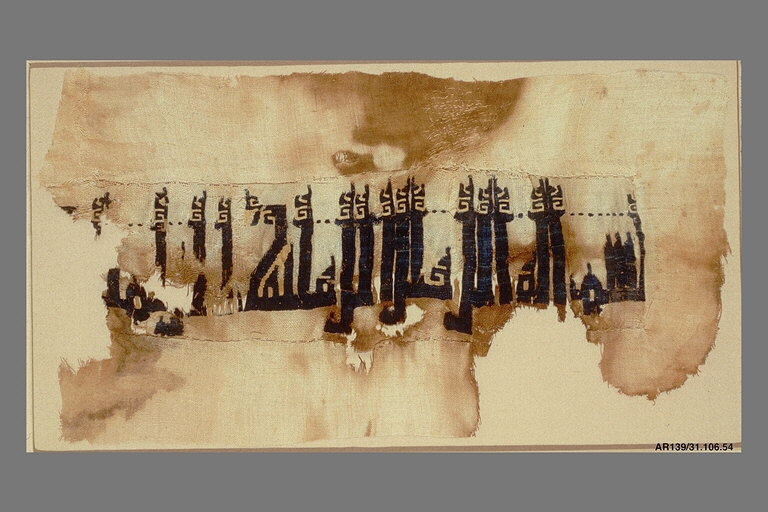
Within the hushed archives of Natalie Fashion Atelier, the Tiraz fragment stands as a silent testament to the enduring dialogue between imperial power and textile artistry. This isolated artifact, a relic of early Islamic courtly production, transcends its historical function as a decorative armband. For the 2026 haute couture season, it serves as a profound archaeological blueprint, challenging our contemporary understanding of silhouette, drape, and the very essence of luxury. The fragment’s composition—a reciprocal interplay of plain weave linen and tapestry-woven silk—offers a masterclass in material hierarchy and structural tension, principles that will define the atelier’s forthcoming collection.
Material Dialectics: The Architectural Logic of Linen and Silk
The genius of the Tiraz lies not in its opulence, but in its disciplined juxtaposition of radically different material properties. The plain weave linen ground provides a rigid, almost architectural canvas. Its inherent crispness and low elasticity create a stable, planar surface, reminiscent of a structural membrane. In contrast, the tapestry weave silk introduces a fluid, chromatic density that sits atop the linen like a bas-relief. This is not a mere embellishment; it is a structural dialogue. The silk’s weft-faced technique creates a thick, unyielding surface that, when applied to the linen, alters the fabric’s center of gravity and flexural rigidity.
For 2026, we translate this dialectic into a new paradigm of hybridized construction. The silhouette will no longer be defined by a single textile, but by the strategic fusion of opposing physical forces. We propose a bodice constructed from a micro-ribbed, high-twist linen that mimics the fragment’s ground, providing a sculptural, corseted rigidity without the need for boning. This base is then overlaid with intarsia-knitted silk panels, precisely placed at the shoulders and hips, echoing the Tiraz’s original placement. The silk’s inherent luster and heavier drape will create a controlled, three-dimensional topography, allowing the garment to hold its form while whispering with movement. The 2026 silhouette thus becomes an engineered landscape, where the eye travels from the stark, matte plains of linen to the luminous, raised plateaus of silk.
Deconstructing Classical Elegance: The Grammar of the Band
The Tiraz’s defining feature—its horizontal inscription band—is a lesson in proportional rhythm and spatial punctuation. Historically, this band served as a marker of royal authority, a literal line of text woven into the fabric of power. In our aesthetic archaeology, we deconstruct this band not as a literal inscription, but as a conceptual seam. It informs a new approach to the waistline and the empire line, transforming them from simple closures into dynamic zones of transition.
The 2026 collection will feature gowns where the waist is not cinched, but rather defined by a band of contrasting material density. We will employ a technique we term textile calligraphy: a wide, tapestry-woven silk sash, inspired by the fragment’s band, is integrated directly into the garment’s structure. This sash will be woven with an abstract, geometric pattern that echoes the angularity of Kufic script, but rendered in a monochromatic palette of ivory and ecru. This band will act as a structural hinge, allowing the skirt to flare dramatically from a rigid, columnar bodice. The elegance emerges from the seamless, almost magical transition between these two states—from the architectural to the fluid—a direct homage to the Tiraz’s own masterful handling of its constituent parts.
From Fragment to Form: Silhouette as a Function of Tension
The fragment’s state of partial preservation—its frayed edges and incomplete narrative—is itself a powerful design driver. It liberates us from the tyranny of the perfect, finished edge. For 2026, we embrace the concept of the raw, deliberate edge. Hemlines will not be finished with traditional rolled hems or blind stitches. Instead, they will be left in a state of controlled fray, with the linen’s warp threads exposed and allowed to fringe naturally. This is not a sign of neglect, but a declaration of material honesty, a high-fashion interpretation of the artifact’s authentic wear.
This principle extends to the overall silhouette. The Tiraz’s rectangular, woven structure suggests a move away from overly complex, multi-paneled cutting. Instead, we propose minimalist, plank-like silhouettes that rely on the fabric’s inherent properties for their shape. A 2026 evening coat, for instance, will be cut in a single, sweeping rectangle of heavy linen, closed with a single, silk-tapestry-covered toggle at the sternum. The garment’s volume will be achieved not through tailoring, but through the sheer weight and stiffness of the fabric, creating a modern, monumental column that moves with a stately, deliberate grace. The wearer becomes a living architectural model, their form a canvas for the play of light across the dual textures.
Luxury Recalibrated: The Value of the Artisanal Gesture
Finally, the Tiraz fragment redefines our conception of value. Its worth is not derived from the cost of its raw materials alone, but from the immense, invisible labor embedded in its warp and weft. The tapestry weave, with its discontinuous wefts and intricate pattern control, represents hundreds of hours of focused, human attention. This is the ultimate luxury—the tangible manifestation of time and skill.
For the 2026 client, the atelier offers not just a garment, but a portable artifact of craftsmanship. The collection will be produced in strictly limited numbers, with each piece requiring a minimum of 150 hours of handwork. The silk elements will be woven on antique hand-looms in Lyon, while the linen will be sourced from a single, heritage mill in Normandy. This commitment to process is the final, and most crucial, translation of the Tiraz’s legacy. The 2026 silhouette is not merely a shape; it is a vessel for a philosophy of patience, precision, and the profound, silent power of a thread. It is classical elegance, deconstructed and rebuilt for a new era, its foundation rooted firmly in the archaeological dust of a glorious past.