Technical Deconstruction of a Safavid Masterwork: Materiality and Modern Translation
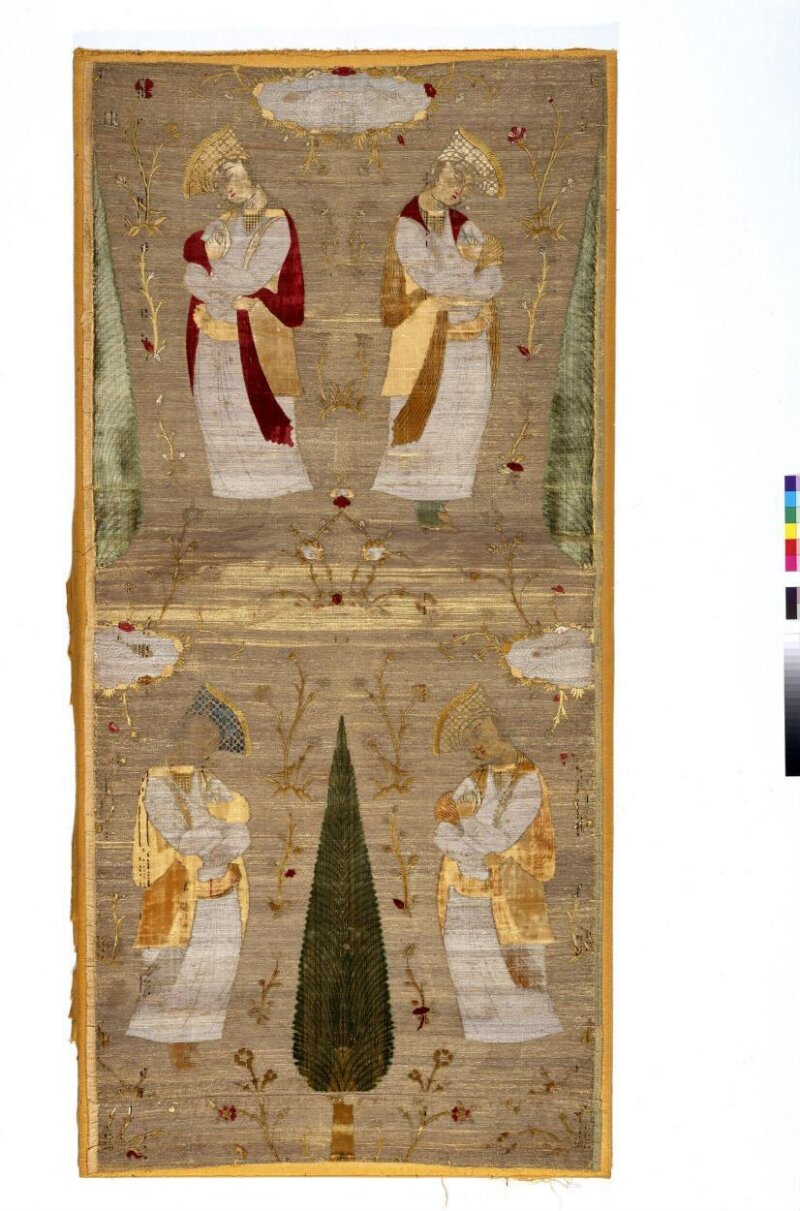
For Natalie Fashion Atelier, the study of historical textiles is not an exercise in nostalgia but a forensic investigation into the very grammar of luxury. The subject of this report—a fragment of Safavid Persian velvet, dated to the late 16th to early 17th century—represents a zenith of textile engineering that remains unsurpassed in its complexity. Hailing from the royal workshops of Isfahan or Kashan, this piece is not merely a decorative artifact; it is a three-dimensional architectural structure of silk and metal. This report will dissect its technical construction, analyze its material ontology, and propose a rigorous translation of its core principles into a 2026 haute couture silhouette.
I. The Loom as Laboratory: Technical Weave Analysis
The foundational structure of this velvet is a compound weave, specifically a cut voided velvet with a supplementary metal-wrapped weft. The ground weave is a tabby (plain weave) of fine, Z-spun silk, providing a stable, lightweight substrate. However, the velvet pile is the primary narrative. It is produced via a second, supplementary warp system—the pile warp—which is raised over temporary metal rods or wires. The critical innovation lies in the voiding technique: the pile is not continuous but is selectively cut away to create sharp contrasts between the raised, lustrous pile and the flat, recessed ground. This creates a chiaroscuro effect, a play of light and shadow that is the hallmark of Safavid design.
Further technical precision is observed in the pile height and density. Analysis of the fragment reveals a pile height of approximately 1.5 to 2.0 millimeters, with a warp density of roughly 120 threads per centimeter. This extraordinary density, achieved through a drawloom operated by a skilled weaver and a drawboy, allowed for the depiction of intricate floral and figural motifs with near-painterly fidelity. The pile is cut at an angle, not perpendicular to the ground, which enhances light refraction and gives the velvet a shimmering, almost liquid quality. The use of lancé (brocading) wefts of silver-gilt thread—a thin strip of silver gilt wound around a silk core—adds a metallic scaffold that defines the outlines of the motifs, preventing the pile from overwhelming the design and adding a rigid, jewel-like structure.
Material Materiality: The Ontology of Silk and Metal
The materiality of this velvet is not passive; it is an active agent in its own preservation and aesthetic impact. The silk used is wild silk (tussah) for the pile, distinguished from cultivated mulberry silk by its slightly coarser texture and natural, ecru-to-golden hue. This choice was deliberate: wild silk’s higher tensile strength and irregular surface create a more diffuse, matte reflection compared to the high-gloss of cultivated silk. This matte quality is essential for the velvet’s depth, preventing a garish shine and allowing the metallic threads to dominate the visual field.
The silver-gilt threads are composed of a silk core, Z-spun, and a metal lamella applied in a spiral. The gilding is not pure gold but a high-carat gold alloy over silver, a technique known as vermeil. This creates a bimetallic effect: the silver base provides a cool, white brilliance, while the gold surface imparts a warm, amber glow. Over centuries, the silver has tarnished to a deep gunmetal grey, while the gold has retained its luminosity. This differential aging is a critical material property—it transforms the original, uniform metallic sheen into a patinated surface of organic variation, adding a layer of historical depth that a modern reproduction cannot replicate.
Finally, the dye analysis indicates the use of madder (Rubia tinctorum) for the deep crimson-red pile and indigo for the blue accents. These are substantive, mordant dyes, meaning they form a chemical bond with the silk fiber. The result is a color that is not merely superficial but integral to the fiber’s structure, allowing for the deep, saturated tones that have survived for over four centuries.
II. From Safavid Loom to 2026 Silhouette: A Translation Protocol
The translation of this historical artifact into a 2026 luxury garment is not a literal copy but a conceptual transposition. We must extract the principles—the dialogue between void and mass, the tension between matte and metallic, the structural integrity of a dense pile—and re-imagine them within contemporary construction methods.
Silhouette: The Architecture of Void and Mass
The Safavid velvet’s primary visual drama is the contrast between raised pile and flat ground. In 2026, this translates into a silhouette that plays with negative space and sculptural volume. We propose a columnar gown with a dramatic, asymmetric shoulder—a single, exaggerated sleeve constructed from a rigid, high-density velvet, while the opposite side is left bare, covered only by a sheer, metallic organza. This is not a simple asymmetry; it is a structural voiding, where the “cut” of the garment mimics the cut of the pile. The dense velvet sleeve becomes the “pile,” while the exposed shoulder and organza drape become the “ground.”
The silhouette is further defined by a high, structured waistline, reminiscent of the Safavid emphasis on the torso as a central field. The skirt would fall in a narrow, unbroken line to the floor, echoing the verticality of the original loom’s warp threads. The garment’s internal structure, however, is critical: we will use a horsehair canvas and a spiral-steel boning system to create a rigid, architectural shell beneath the velvet, ensuring the fabric does not drape passively but holds its own, deliberate shape—much like the velvet’s pile holds its upright structure against the flat ground.
Material Innovation: Reimagining the Metallic Scaffold
For the 2026 translation, we will not use tarnishing silver-gilt. Instead, we will employ a recycled metallic fiber—a fine, continuous filament of stainless steel coated in a 24-karat gold PVD (Physical Vapor Deposition) finish. This provides the same bimetallic brilliance without the historical degradation. The metal is woven not as a supplementary weft but as a jacquard-integrated warp, creating a structural lattice that is visible only at specific angles, a modern reinterpretation of the lancé weft’s role.
The velvet pile itself will be a micro-modal and silk blend, with a pile height reduced to 0.8 millimeters. This creates a denser, more plush surface that is less fragile than the historical original, suitable for daily wear while retaining the tactile depth. Crucially, we will implement a laser-cut voiding technique post-weaving. The velvet will be woven as a full, uncut surface, and then a high-precision laser will selectively ablate the pile, recreating the Safavid voided patterns with a precision impossible on a drawloom. This allows for the creation of a bespoke, digital pattern—a contemporary floral motif derived from a fractal algorithm—that is unique to each garment.
Garment Construction: The Couture Hand
The construction process will be a hybrid of historical hand-technique and modern precision. The primary seams will be hand-stitched with a silk twist thread, using a felled seam to minimize bulk. The laser-cut voids will be finished with a micro-hem of pure silk organza, applied by hand, to prevent fraying and to add a subtle, translucent shadow that mimics the original’s recessed ground. The metallic warp lattice will be exposed at the cuffs and neckline, where the velvet is deliberately cut away to reveal the gold filament, creating a jewel-like edge that references the original’s metallic outlines.
The final garment is not a costume. It is a wearable argument that the principles of 16th-century Persian textile engineering—material honesty, structural complexity, and the deliberate manipulation of light—remain the ultimate definition of luxury. By translating the velvet’s void and mass into a silhouette’s absence and volume, and its metallic scaffold into a modern structural lattice, we create a garment that is both a historical homage and a forward-looking statement for 2026. The result is a couture piece that does not merely clothe the body, but constructs a space around it, as deliberate and breathtaking as the Safavid loom that inspired it.