Archaeology of the Gaze: The Medusa Ring as a Blueprint for 2026 Structural Elegance
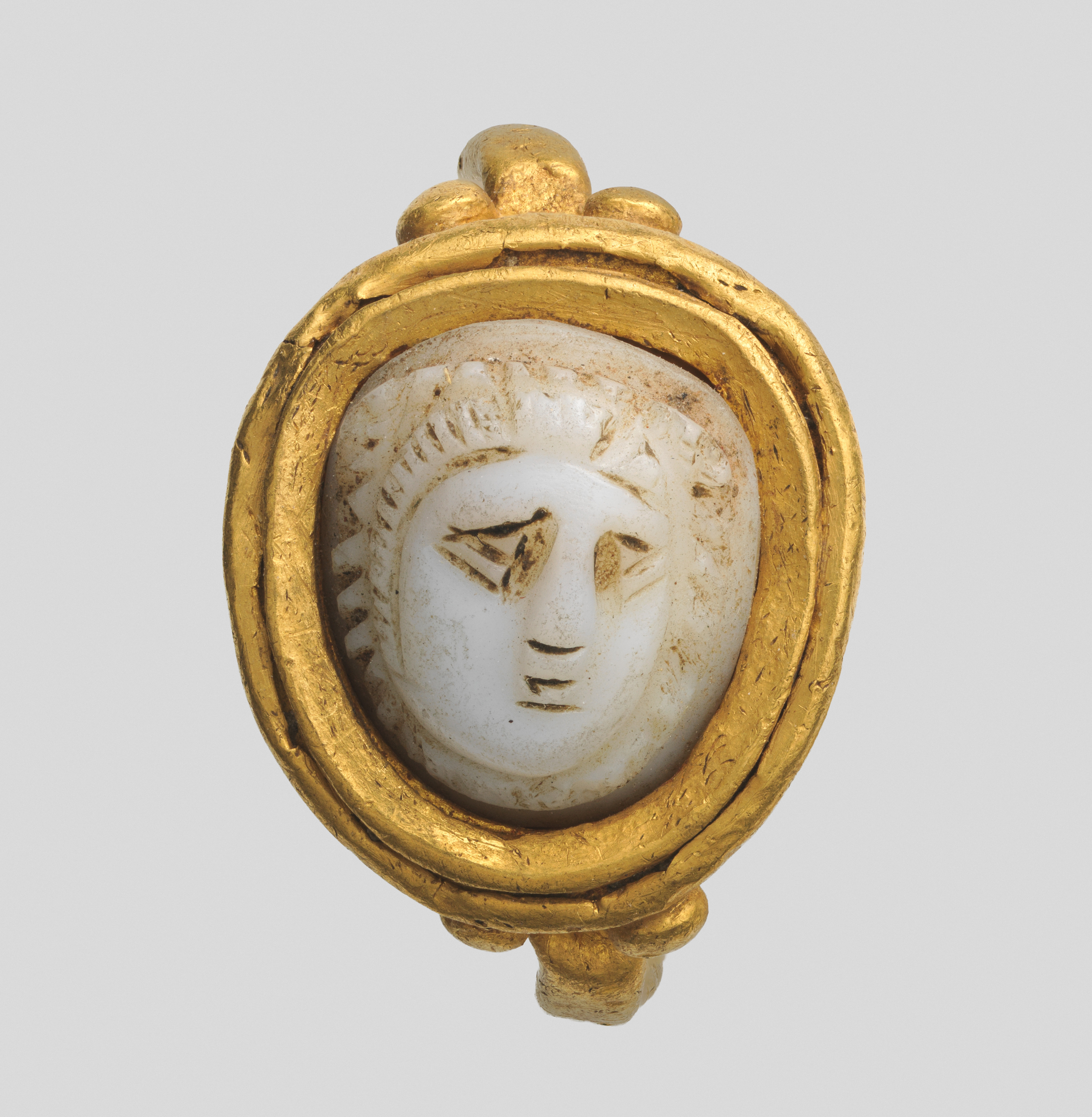
The artifact under examination—a gold ring with a narrow, unadorned shaft and an oval bezel housing a cameo of Medusa—is not merely a jewel. It is a compressed treatise on power, protection, and the paradox of beauty. For the Natalie Fashion Atelier, this piece functions as a critical node in our aesthetic archaeology, bridging the apotropaic traditions of Greco-Roman antiquity with the hyper-refined, psychologically charged silhouettes of the 2026 haute couture season. The ring’s material dialogue between warm, malleable gold and the cold, brittle depth of black onyx provides a foundational grammar for constructing garments that articulate a new form of armored elegance—one that shields the wearer while simultaneously commanding the room.
Material Dialectics: The Structural Tension of Gold and Onyx
From a technical standpoint, the ring’s materiality is a masterclass in binary opposition. The gold shaft, narrow and fluid, suggests a quiet, internalized strength—a line that follows the finger without interruption, symbolizing continuity and unyielding support. In contrast, the onyx oval is a field of absolute negation, absorbing light rather than reflecting it. This is not a passive black; it is a volumetric void that gives the carved Medusa her terrifying presence. For 2026, this dialectic translates directly into silhouette construction. We are moving away from the monolithic, metallic evening gowns of previous seasons toward a bipartite structuralism.
Consider a couture gown where the bodice is engineered from a liquid, champagne-gold lamé, cut on the bias to mimic the fluidity of the ring’s shaft. The fabric is not stiff; it moves with a deceptive softness, suggesting vulnerability. Then, the skirt is constructed from a dense, matte-black gazar or a double-faced wool crepe, treated with a micro-embossed finish that mimics the granular texture of carved onyx. The transition seam—the point where gold meets black—is not hidden but celebrated, finished with a hand-rolled edge that mirrors the precise lip of the ring’s bezel. This creates a silhouette that is simultaneously fluid and monolithic, a visual oxymoron that forces the eye to oscillate between the two materials, just as the eye oscillates between the beauty of Medusa’s face and the horror of her serpentine hair.
The Oval Bezel: Reimagining the Shoulder and the Hip
The oval form of the bezel is the ring’s central architectural event. Unlike a round cabochon, which suggests cyclical completeness, the oval implies a directional tension—a lens through which the wearer’s power is focused. In our 2026 haute couture framework, this oval is transposed onto the human form through the sculpted shoulder line. We are abandoning the aggressive, squared shoulder pad of the 1980s power suit. Instead, we propose a cocooned oval shoulder, achieved through a complex system of internal boning and horsehair canvas. The sleeve head is cut in a single, sweeping curve that extends from the neckline to the deltoid, creating a convex, protective shell that visually encases the upper body.
This is not a mere padding; it is a couture-level construction technique involving moulage directly on the dress form. The fabric—perhaps a stiffened silk taffeta—is draped to create a hollow, cavernous space between the fabric and the shoulder, echoing the depth of the onyx intaglio. The effect is one of contained power: the wearer appears to be shielded by an invisible carapace. Similarly, the oval motif is echoed at the hip, where a basque waist is cut in a pronounced oval curve, dipping low at the front and rising sharply at the back. This creates a silhouette that is not hourglass but rather lens-shaped, focusing the eye on the pelvic pivot point—the center of gravity and, symbolically, the seat of Medusa’s petrifying power.
Intaglio and Negative Space: The Art of the Cut-Out
The cameo itself—a relief carving—is a study in positive and negative space. The raised profile of Medusa’s face emerges from the recessed black ground. Our 2026 interpretation reverses this logic. Instead of relief, we employ negative-space cut-outs as a primary design tool. These are not gratuitous slashes of skin; they are strategic, architectonic apertures that reveal the body in the same way the onyx ground reveals the white gold profile of the carving.
In a signature evening dress, this manifests as a series of precision-cut ovals along the vertebral column, each one framed by a hand-stitched, gold-wire piping. The skin becomes the “cameo,” emerging from the dark fabric ground. The placement is calculated according to the principles of contrapposto—the apertures are not symmetrical but are offset to follow the natural S-curve of the spine, creating a kinetic, serpentine rhythm as the wearer moves. This technique demands an extraordinary level of pattern engineering, as the cut-outs must align perfectly with the garment’s internal structure to prevent sagging or distortion. Each aperture is reinforced with a micro-fused organza interface, ensuring that the negative space remains as crisp and deliberate as the carved line of Medusa’s profile.
From Apotropaic Charm to Modern Armor
Historically, the Medusa head was an apotropaion—a device to ward off evil. The ring was worn not just for adornment but for protection. In the context of 2026, where the public sphere is increasingly scrutinized and the female body is subject to constant visual assessment, the Medusa-inspired silhouette becomes a form of psychological armor. The oval shoulder shell and the lens-shaped hip are not merely aesthetic choices; they are barriers that deflect the gaze. The matte black fabrics absorb light, creating a zone of visual silence, while the gold accents serve as deliberate, controlled points of radiance—drawing the eye only where the wearer permits.
This is a profound shift from the overt sexuality of recent seasons. The 2026 Natalie Fashion Atelier woman does not expose; she reveals. She uses the garment as a strategic interface, controlling the narrative of her own body. The narrow gold shaft of the ring—a minimal, almost austere element—finds its analogue in the ultra-fine, high-tensile gold chain used to edge a neckline or define a wrist. It is a whisper of luxury, a precise line that speaks of immense restraint and confidence. The wearer is not adorned; she is fortified.
Conclusion: A New Classical Grammar
The Gold and onyx Medusa ring is not a relic to be replicated but a generative algorithm for construction. Its lessons are threefold: the power of material opposition, the architectural significance of the oval, and the strategic deployment of negative space. By translating these principles into the language of 2026 haute couture, we create silhouettes that are not merely garments but portable monuments—structures that carry the weight of history while remaining utterly contemporary. The narrow shaft reminds us that strength can be subtle; the oval bezel teaches us that focus is a form of power; and the onyx ground insists that darkness, when carved with intention, can be the most luminous material of all. This is the future of luxury: not the accumulation of ornament, but the precise, intellectual orchestration of material, form, and void.