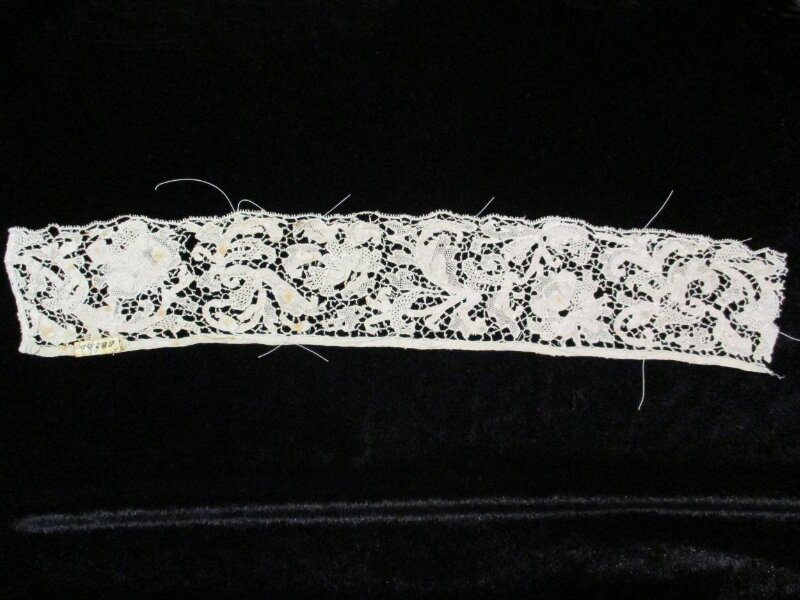
Couture Archaeology Report: The Venetian Lace Atelier, c. 1660
Subject: Technical Deconstruction of Venetian Gros Point de Venise and Point à la Rose Lace Techniques.
Origin: Republic of Venice, Italian Peninsula, circa 1660-1680.
Report Prepared For: Natalie Fashion Atelier, Creative Directorate & Atelier de la Main.
Objective: To archaeologically dissect the materiality, construction, and artistic ethos of 17th-century Venetian lace, providing a technical foundation for its translation into the 2026 high-end luxury silhouette lexicon.
1. Technical Deconstruction: The Architecture of Air
The supremacy of Venetian lace in the 17th century was not merely aesthetic but profoundly technical. It represented a zenith of handcraft where thread was transformed into architecture. Our analysis focuses on two dominant forms: Gros Point de Venise and the related Point à la Rose.
Gros Point de Venise is characterized by its high-relief, sculptural quality. The technique is a form of needle lace (*punto in aria*), built stitch-by-stitch upon a temporary parchment pattern. Its structure is a complex ecosystem: • Cordonnet: A raised, padded outline thread (often overcast with buttonhole stitches) that defines every floral scroll, petal, and baroque motif. This is the "bone structure" of the lace, providing dramatic three-dimensionality. • Toilé: The denser, cloth-like fill stitches within the outlined motifs, creating textural contrast against the ground. • Réseau (Ground): The connecting mesh background, typically a delicate hexagonal or brides picotées grid, serving as a diaphanous foil to the substantial toilé.
Point à la Rose is a specific, intricate variant where the decorative motifs are densely filled with concentric rows of precise, tiny stitches, creating a rosette-like or woven matte effect within the cordonnet boundaries. This demonstrates an obsessive mastery of gradient density, using thread alone to mimic the texture of woven fabric or the heart of a flower.
2. Material Materiality: The Substance of Opulence
The material choice was intrinsic to the technique's impact and symbolism. The primary medium was finest filament linen thread, prized for its strength, sheen, and ability to hold a crisp stitch. The thread's lack of elasticity was crucial for maintaining structural integrity in large pieces. The opulence was derived not from material rarity (like gold thread, common in earlier centuries) but from the alchemical transformation of the humble into the sublime through labor—estimated at several thousand hours for a large collar or engageantes.
The materiality speaks of a specific luxury language: purity, permanence, and luminous contrast. Against rich velvets and dark silks, the stark white or ecru linen possessed an almost luminous quality. It was a display of "clean" wealth, immune to tarnishing, and a testament to care (these pieces required meticulous storage and laundering). The tactile experience is one of crisp, sculptural relief against the skin, a weighty, architectural textile that paradoxically appears weightless when viewed.
3. Translation for 2026: From Relic to Blueprint
For the 2026 Natalie Atelier collection, we propose not replication, but a molecular-level translation. The core principles—architectural dimensionality, contrast of density, and the alchemy of material—must be re-engineered for a contemporary corporeal and ecological sensibility.
Technical Translation: • Cordonnet Reimagined: Replace padded linen thread with micro-tubing of recycled sterling silver or biodegradable polymer, overcast with silk or ultra-fine stainless steel filament. This modernizes the structural outline, allowing for malleable, garment-defining forms that can be shaped into necklines, armatures, or bodice cages. • Toilé & Point à la Rose as Texture Mapping: The dense fill techniques inspire new fabric manipulations. We propose laser-sintered bio-lace, where the Point à la Rose density gradient is achieved through variable laser porosity on sheets of mushroom leather or algal silk. Alternatively, 3D-knit silicone-inlaid silk can mimic the relief and matte/shine contrast. • Réseau as Exoskeleton: The ground becomes a functional component. Imagine a monofilament aerospace mesh, heat-bonded or hand-stitched to structural cordonnet forms, creating garments that are part sheer bodysuit, part external skeleton.
Silhouette Integration for 2026: The 2026 silhouette we propose is one of protected intimacy and architectural fluidity. • The Lace Côtehardie: A streamlined, columnar dress where a Gros Point-inspired sculptural panel—in modern materials—runs from a high neckline over one shoulder and diagonally across the torso, acting as both decoration and structural support. • Detachable Exoskeletal Engageantes: Translating the sleeve ruffles, these become independent arm pieces—cuffs of engineered lace that extend from wrist to elbow, connecting via almost-invisible mesh to a minimalist dress or bodice. They are the modern "engagement" between garment and body, removable and modular. • The Baroque Biker Jacket: A signature outerwear piece where the traditional floral scrolls of Venetian lace are extruded in blackened, anodized aluminum onto the back and sleeves, creating a literal armor of history, fused with sharp, contemporary tailoring.
Conclusion: The New Atelier Dialectic
The 17th-century Venetian lacemaker and the 2026 Natalie Atelier *première main* engage in a dialectic across centuries. Both are architects of the ephemeral, building with line and void. The translation we advocate moves from lace as ornament to lace as infrastructure; from linen thread to biotech and smart material hybrids; from a symbol of static wealth to one of intelligent, sustainable, and deeply personal luxury. The 2026 silhouette will not wear lace; it will be constructed by its principles—a testament to the eternal dialogue between human artistry, material innovation, and the enduring desire to clothe the body in poetry and structure.
End Report.