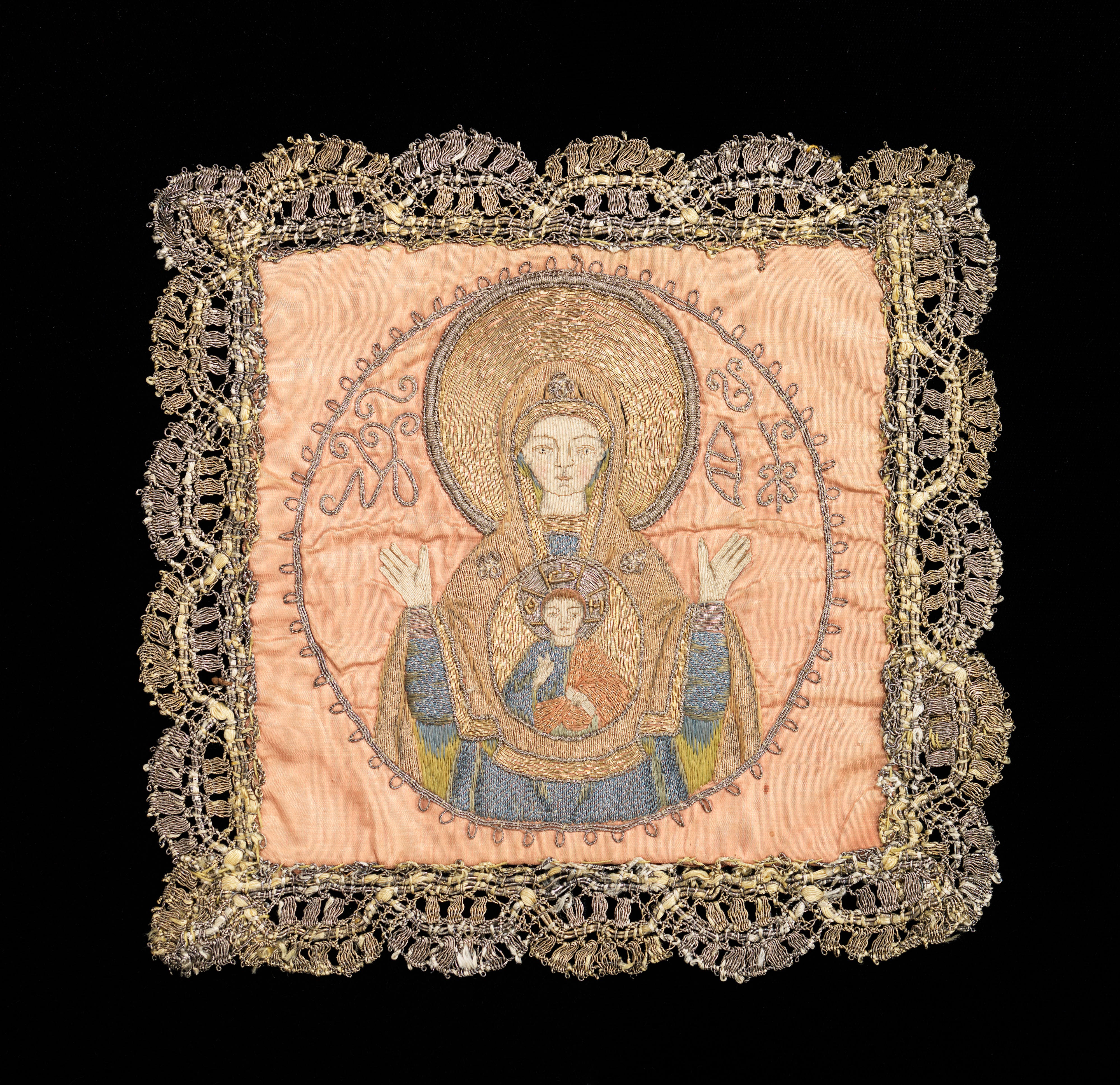
Deconstructing the Paten Cover: An Archaeological Blueprint for 2026 Silhouettes
The paten cover, a seemingly austere liturgical object, represents a profound convergence of material discipline and sacred geometry. Isolated within the aesthetic archaeology of global heritage, its form—a rigid, often convex disc designed to shield the consecrated host—transcends its ritual function to become a masterclass in structural purity. For Natalie Fashion Atelier, this artifact is not a relic but a blueprint. By dissecting its constituent elements of silk, metal, and cotton, we extract a technical lexicon that directly informs the architectural elegance of our 2026 haute couture silhouettes. The paten cover’s silent authority—its balance of opulent interiority and austere exterior—offers a paradigm for modern luxury that prioritizes hidden complexity over overt display.
Material Dialectics: The Tripartite Foundation
The genius of the historical paten cover lies not in the individual value of its materials, but in their dialectical tension. The outer shell, frequently hammered metal—silver, gilt-bronze, or even precious alloys—provides a fortress of permanence. Its rigid, reflective surface speaks to the immutable. Conversely, the interior, traditionally lined with fine silk or padded cotton, introduces a sensorial counterpoint: a soft, absorbent, and intimate space. This opposition—hard against soft, reflective against matte, structural against pliable—is the foundational principle we transpose onto the 2026 silhouette.
In our atelier, this translates to a deliberate subversion of surface hierarchy. We are no longer designing garments that are merely draped or merely constructed. Instead, we engineer composite volumes. A sculptural, almost metallic outer shell—achieved through technical silk gazar bonded with micro-alloy filaments—encases an interior of fluid, unbleached cotton voile. The wearer experiences a dual reality: the external, architectural presence that commands a room, and the internal, tactile comfort that remains a private luxury. This is not ornamentation; it is material storytelling.
Architectural Volumes: The Convex Imperative
The paten cover’s defining geometry is its subtle convexity. It is not a flat disc but a shallow dome, a form that captures light and directs the eye inward. This convex imperative becomes the central structural thesis for our Autumn/Winter 2026 collection. We reject the flat, two-dimensional plane of conventional tailoring. Instead, our jackets and bodices are built with a pronounced, yet controlled, curvature across the shoulder and upper back.
This is achieved through a technique we term “rigid draping.” Layers of silk organza are meticulously steam-molded over a wooden form, not unlike the medieval armorer’s craft. The result is a silhouette that possesses the monumental stillness of the artifact, yet retains a whisper of fluidity at the hem. The shoulder line, often the locus of power in couture, is re-imagined as a smooth, protective dome, echoing the cover’s function of safeguarding what lies beneath. This is not armor in a defensive sense, but armor as an expression of serene confidence.
Surface Semiotics: The Language of Restraint
In an era of digital maximalism, the paten cover reminds us of the profound power of restraint. Its beauty is not derived from intricate engraving alone, but from the interplay of polished and matte zones. The hammered texture of the metal catches light in a thousand micro-reflections, while the silk interior remains a void of deep, absorbing color. Our 2026 surface treatments mirror this dichotomy.
We introduce a new category of textile: “chameleon silk.” This is a heavy, duchesse satin woven with a fine, flexible metal thread—not for shine, but for a subtle, liquid movement that mimics the patina of aged silver. When the wearer moves, the fabric undulates, creating a chiaroscuro effect that is both modern and ancient. Conversely, we utilize raw, unbleached cotton in unexpected places—the under-collar of a coat, the interior panel of a skirt—to provide a grounding, tactile anchor. The luxury is not in the opulence of the material, but in the intelligence of its placement.
From Artifact to Attire: The 2026 Silhouette Formula
Translating the paten cover’s essence into a wearable formula requires a rigorous, almost mathematical approach. We define three distinct silhouettes for 2026, each a direct descendant of the artifact’s structural DNA.
Silhouette I: The Monolith
This is a full-length, columnar gown that functions as a mobile reliquary. The outer layer is a seamless, molded shell of black silk gazar, stiffened with a cotton-based interfacing to achieve a ceramic-like rigidity. The interior is a slip of fluid, raw silk, creating a two-inch air gap between body and shell. The effect is one of suspended animation—the garment does not cling to the body but exists in perfect, independent harmony with it. The neckline is a high, rounded arc, directly referencing the cover’s rim, while the hem is cut with a slight, deliberate asymmetry to allow for movement. This is not a dress; it is a statement of architectural permanence.
Silhouette II: The Reliquary Bustier
Here, we focus on the torso as a sacred vessel. The bustier is constructed from sculpted metal mesh, overlaid with a single, unbroken piece of silk velvet. The mesh provides the structural integrity—the “metal” of our triad—while the velvet offers the sumptuous, tactile finish. The silhouette is sharply defined, with a curved under-bust seam that mimics the convex base of the paten. The back is cut low, revealing a panel of pure white cotton, a nod to the artifact’s pristine interior. This piece is designed to be worn over a simple white shirt, creating a layered effect that speaks to the historical practice of concealing and revealing.
Silhouette III: The Cloak of Silence
Our final silhouette is a full-length cape, the most direct homage to the cover’s protective function. It is crafted from a double-faced fabric: one side a deep, metallic bronze silk, the other a soft, brushed cotton. The cape is cut in a single, sweeping circle, with a high, standing collar that frames the face like the rim of a sacred disc. There is no closure; it is designed to be held closed by the wearer’s hand, a gesture of self-containment. The weight of the fabric—a deliberate blend of silk and metal—creates a gravitational pull that anchors the wearer, evoking the heft and permanence of the original artifact.
Conclusion: The Luxury of the Hidden
The paten cover, in its isolated archaeological context, teaches us that true luxury is not about exposure but about the sanctity of the concealed. In 2026, Natalie Fashion Atelier will not chase the ephemeral trends of fast fashion. Instead, we will offer our clientele a form of wearable heritage—garments that possess the quiet authority, structural intelligence, and material honesty of a masterpiece that has survived centuries. The silk, the metal, the cotton—these are not merely materials. They are the vocabulary of a new, silent language of elegance. Our silhouettes become the modern paten covers, shielding not a host, but the wearer’s own essence, within a beautifully engineered shell of timeless grace.