The Calash Reconsidered: An Aesthetic Archaeology of Silk and Structure for the 2026 Silhouette
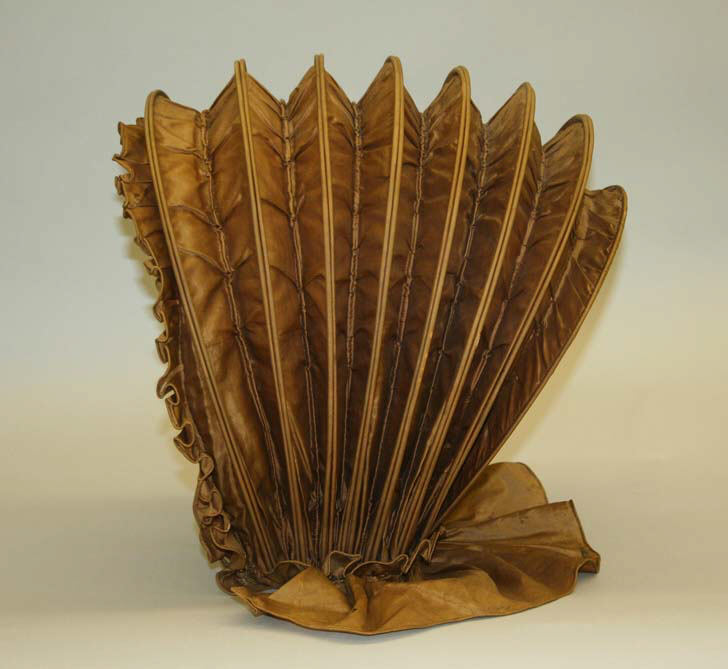
Within the hushed archives of Natalie Fashion Atelier, the calash—that extraordinary, collapsible bonnet of the late 18th century—exists not as a relic, but as a provocation. Isolated from its quotidian function as a protective headdress, the calash reveals itself as a masterclass in engineered softness, a dialogue between rigid architecture and fluid materiality. For the 2026 couture season, we deconstruct this classical elegance not to revive its form, but to extract its underlying principles: the tension between volume and restraint, the choreography of silk in motion, and the radical potential of a silhouette that is simultaneously monumental and ephemeral. This research artifact positions the calash as a foundational text for a new lexicon of high-end form.
I. The Calash as Structural Paradox: From Carriage to Catwalk
Historically, the calash—derived from the French calèche, or carriage—was an ingenious response to the impracticalities of towering powdered wigs. Its collapsible frame of whalebone or cane, hinged and articulated, allowed for a dramatic, domed profile that could be folded flat when not in use. This is the first critical extraction for the 2026 atelier: the calash is a study in deployable architecture. Its silhouette is not static; it is a proposition of transformation. The wearer, by manipulating the structure, could alter her own optical volume, moving from a compressed, linear profile to a sweeping, architectural arc.
For our contemporary practice, this translates into a radical rethinking of the jacket and the cape. The 2026 silhouette will not be draped or cut in a single plane; it will be engineered with internal, articulated armatures—lightweight carbon-fiber ribs, heat-set polymer boning, and precision-milled hinges—that allow the garment to be worn in multiple configurations. A silk evening coat, for instance, may present a severe, sculpted shoulder line in repose, only to be expanded by the wearer into a sweeping, calash-inspired hood or a dramatic, wing-like collar for the evening’s grand entrance. This is not mere versatility; it is a performative act of self-architecture, a direct inheritance from the calash’s original genius.
II. Materiality as Memory: The Silk of the Calash
The calash’s materiality is inseparable from its structural logic. Typically constructed from heavy silk taffeta, lustrous satin, or rich gros de Tours, the fabric was not a passive covering but an active participant in the form. The crispness of taffeta provided the necessary body to hold the bonnet’s domed shape, while its characteristic rustle—the frou-frou—became an auditory signature of presence. This is where our aesthetic archaeology deepens. We are not merely looking at silk; we are analyzing its tensile strength, its memory, and its acoustic properties.
For 2026, we propose a new silk composite, developed exclusively for Natalie Fashion Atelier. This fabric, which we term Soie Calèche, is a double-faced construction: an outer layer of ultra-fine, high-twist mulberry silk organza, woven with a micro-ribbed structure to mimic the calash’s original rigidity, and an inner layer of fluid, washed silk crepe. The outer face provides the architectural hold, allowing for sharp, sculptural folds that stand away from the body. The inner face offers a sensuous, liquid drape against the skin. The result is a material that possesses an inherent dialectical tension—it is both a shell and a second skin. When pleated or gathered, the Soie Calèche retains its crease, holding a memory of the fold, much like the original calash’s hinged ribs. This is not a nostalgic gesture; it is a technical innovation born from historical understanding.
III. Silhouette in Translation: The 2026 Calash-Inspired Forms
Translating the calash’s essence into the 2026 haute couture silhouette requires a deliberate abstraction. We do not recreate the bonnet; we extract its geometric principles. The primary principle is the arc. The calash’s profile is a perfect, sweeping arc from the crown of the head to the nape of the neck. In our new collection, this arc is transposed to the shoulder and the back.
Consider the “Grand Arc” Evening Coat. Cut from a single, continuous panel of Soie Calèche, the coat’s back is constructed with a hidden, articulated rib that runs from the nape down the spine. When the wearer raises her arms, the rib engages, lifting the back of the coat into a magnificent, calash-like dome that frames the head and shoulders. The front remains clean and minimal, a sharp, tailored closure that contrasts with the explosive volume behind. This is a silhouette of controlled drama, where the garment’s most powerful statement is revealed only through movement.
A second translation is the “Collapsible” Bodice. Here, the calash’s folding mechanism is reinterpreted as a series of horizontal, fan-like pleats across the bust and torso. Each pleat is reinforced with a whisper of silk-wrapped boning, allowing the bodice to be worn either fully extended, creating a majestic, pigeon-breasted profile reminiscent of the 1780s, or compressed, folding into a sleek, columnar line. This garment is a study in volumetric modulation, giving the wearer agency over her own silhouette. It is a direct, conceptual descendant of the calash’s collapsible frame, but executed with a modern, minimalist sensibility.
IV. The Aesthetic Archaeology of the Fold
Our research extends beyond the structural to the aesthetic. The calash, when worn, created a series of deep, rhythmic folds—a topography of light and shadow that was both sculptural and painterly. This is the aesthetic archaeology of the fold, a study in how material, when constrained by structure, produces its own unique beauty. For 2026, we are developing a new technique of calash pleating, a hybrid of accordion and sunburst pleating that is heat-set into the Soie Calèche to create a permanent, undulating surface.
These pleats are not merely decorative; they are functional. They allow a garment to expand and contract with the body’s movement, creating a dynamic, ever-changing silhouette. A skirt cut with calash pleats will appear narrow and columnar when the wearer is still, but will bloom into a full, bell-shaped volume with each step. The play of light across these pleats—the way they catch and reflect the light in a thousand tiny facets—echoes the shimmering, iridescent quality of the original silk taffetas. This is elegance as a kinetic event, not a static image.
V. Conclusion: A Legacy of Engineered Elegance
The calash, isolated in our archive, is far more than a historical curiosity. It is a testament to the enduring power of structural intelligence in fashion. Its legacy for the 2026 haute couture silhouette is not one of imitation, but of principle. We inherit its commitment to transformable architecture, its reverence for silk as an active, structural agent, and its understanding of the silhouette as a dynamic, participatory form. At Natalie Fashion Atelier, we are not reviving the calash; we are re-engineering its soul. The result is a collection that is profoundly contemporary, yet whispers of a Parisian past—a silent, rustling dialogue between the carriage bonnet of the 18th century and the avant-garde forms of our immediate future. The silk remembers. We merely listen.