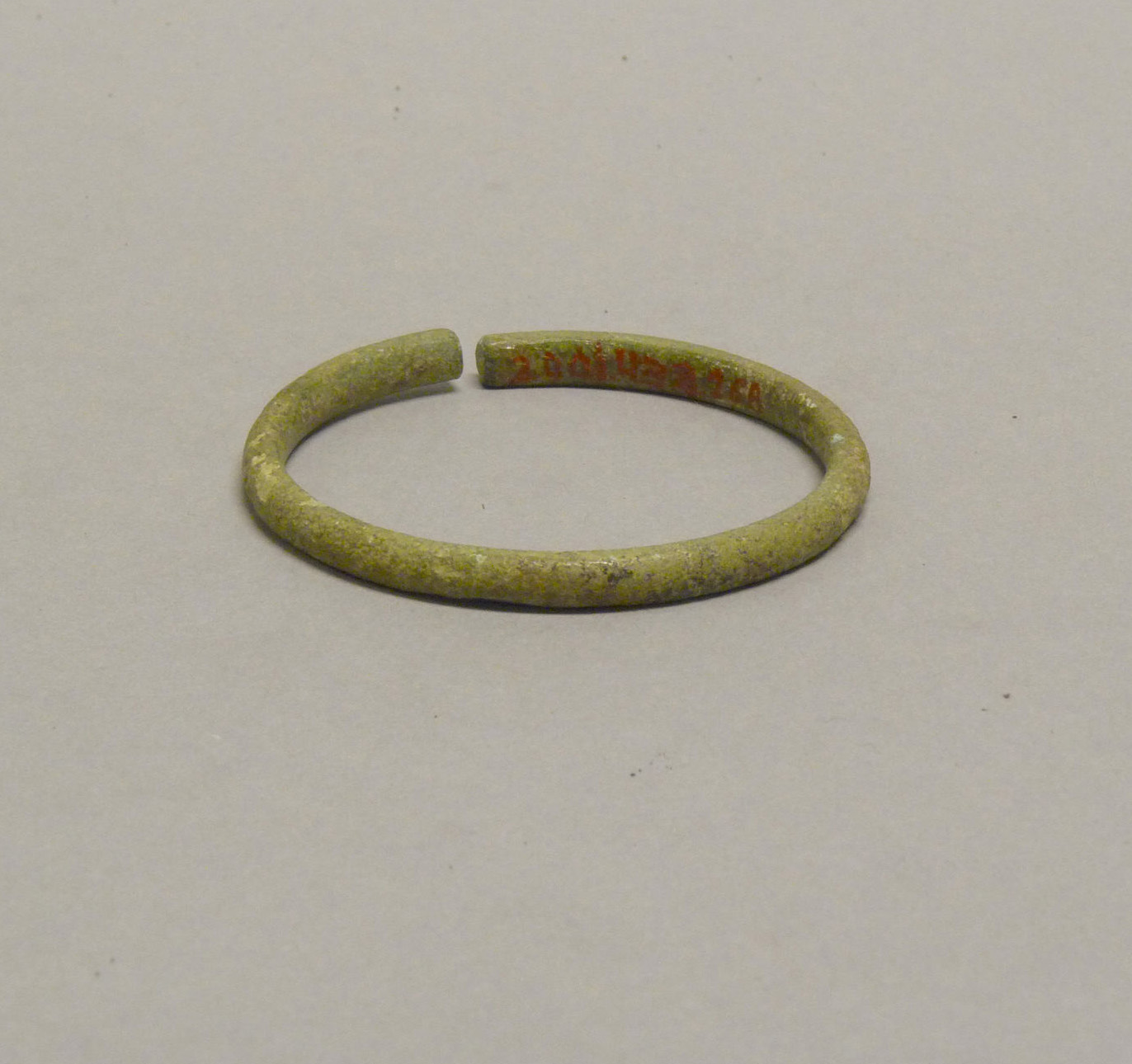
The Bronze Bangle as Structural Genesis: An Archaeological Reading for 2026
The atelier’s current investigation into the Thai bronze bangle is not an exercise in ornamentation, but a deep excavation into structural logic. When positioned against the archive nodes—the Rock in the form of a fantastic mountain and the Jar in the shape of bronze container (hu)—a unifying principle emerges: the dialectic between compression and release. The bangle, seemingly a closed loop, is in fact a study in tension, a micro-architecture of the wrist. For 2026, this principle dictates a silhouette that is simultaneously rigid and fluid, a paradox resolved through advanced tailoring and material engineering.
I. The Archaeological Imperative: From Object to Gesture
The Thai bronze bangle, historically, was never merely decorative. It functioned as a status amulet, a repository of spiritual and physical protection, and a marker of social hierarchy. Its weight was a conscious presence, a constant reminder of one's place within a cosmic order. This is the first lesson for the 2026 silhouette: garments must possess a gravitational presence. The current trend of weightless, ephemeral dressing is countered here by a return to substance. The bangle’s circularity, however, is not static. It is a circle that defines a void, a negative space that shapes the positive. The hu jar, with its bulbous body and flared neck, shares this logic: it is a container that defines volume by its exterior boundaries, yet its essence lies in the empty space within. The fantastic mountain rock, conversely, is all surface, all irregularity, a study in asymmetrical mass.
Thus, the 2026 haute couture silhouette must be conceived as a wearable vessel. The shoulder line becomes the rim of the hu, the torso the bulbous body, and the waist the constricted neck. The bangle’s circularity translates into the arc of the sleeve, the curve of the hem, and the orbit of a collar. The design process, therefore, begins not with a sketch of a dress, but with a three-dimensional study of how bronze’s metallic memory—its ability to hold a shape under stress—can be replicated in silk, wool, and technical lace.
II. Materiality as Method: The Bronze Standard
Bronze, an alloy of copper and tin, is defined by its composite strength. It is harder than pure copper, yet retains a malleability that allows for intricate casting. This dual nature is the blueprint for our fabric choices. We reject the flaccid drape of single-fiber cloths. Instead, we demand bi-material constructions: a rigid, structured outer shell—perhaps a compacted wool or a metallic-coated silk gazar—paired with a fluid, liquid inner layer of charmeuse or crepe de chine. The outer layer provides the armature, the bronze-like casing; the inner layer provides the release, the softness against the skin.
The patina of aged bronze—its verdigris, its dark umber streaks—informs our 2026 color palette. We move beyond flat blacks and whites. We introduce oxidized tones: deep malachite greens, burnt sienna, and a shadowy, almost-black bronze that shifts in the light. This is not a nostalgic beige; it is a metallic decay rendered in matte finishes. The surface of the fabric must mimic the bangle’s surface: not polished to a high shine, but burnished—a subtle, uneven reflectivity that suggests age and ritual use. This is achieved through hand-applied pigment washes and crushed metallic foils, techniques that create a topographical map on the garment’s surface, echoing the fantastic mountain’s craggy relief.
III. Silhouette Synthesis: The 2026 Bangle Line
From this archaeological and material foundation, we extrapolate three distinct silhouette families for the 2026 collection. Each is a direct formal response to the bangle’s geometry and the archive nodes’ volumetric tension.
1. The "Vessel" Silhouette (After the Hu Jar)
This silhouette is characterized by a pronounced, structured shoulder—the rim—that flows into a generously cut, columnar torso—the body—before being cinched sharply at the waist—the neck—and flaring into a short, sculptural peplum—the foot. The effect is that of a garment that holds its own space, a wearable architecture. The sleeves are set in a dolman or batwing style, but they are not soft; they are engineered with internal boning and horsehair canvas to maintain a flared, open arc, mimicking the bangle’s opening. The fabric is a heavy, double-faced wool with a metallic core, ensuring the garment retains its shape even in motion. This is not a dress; it is a bronze casing for the torso.
2. The "Fault Line" Silhouette (After the Fantastic Mountain)
This silhouette rejects symmetry. It is a study in controlled asymmetry, where the garment appears to have been cast, not sewn. One shoulder is heavily padded and extended, while the other is bare and clean. The waistline is not horizontal; it is a diagonal fault line, slicing across the body at an angle, creating a dynamic tension. The skirt is a single, continuous piece of fabric that is twisted and pinned, creating a spiral effect that echoes the mountain’s geological strata. The construction utilizes zero-waste pattern cutting, where the fabric is folded and manipulated like a sheet of bronze, with darts and seams acting as the chisel marks. The garment’s surface is further textured with trapunto quilting and corded piping, creating a relief map of raised and recessed areas.
3. The "Orbit" Silhouette (The Bangle Itself)
Here, the bangle is not a metaphor but a literal structural component. We introduce a series of detachable, rigid collars and cuffs—actual bronze or bronze-finished metal—that orbit the neck and wrists. These are not jewelry; they are architectural extensions of the garment. The dress itself is a simple, columnar sheath in a liquid, metallic jersey. The power of the ensemble lies in the contrast: the fluid, body-hugging fabric versus the rigid, unyielding metal circles. The garment’s silhouette is defined by these orbital boundaries. The wearer’s movement is subtly restricted, creating a graceful, deliberate gait. This is the ultimate expression of the bangle’s logic: the body is the void, and the garment is the vessel that defines it.
IV. Craftsmanship and the 2026 Imperative
This collection demands a return to the atelier’s most rigorous techniques. The première main must be a sculptor, not just a seamstress. We employ moulage à la pièce, draping directly on the mannequin with heavy, unyielding fabrics, forcing the material into submission. The internal structure is paramount: we use hand-stitched horsehair canvas, whalebone stays, and metal spring-steel boning to create the necessary armature. The finishing is equally critical. Seams are not simply pressed; they are hammered flat, like a metalsmith working a seam. Hems are weighted with lead-core piping to ensure they fall with the gravity of bronze.
The 2026 silhouette, therefore, is not a trend. It is a philosophical statement. It posits that luxury is not found in ease, but in deliberate constraint. It is a return to the idea that clothing can be a form of personal armor, a casing that protects and defines the self. The Thai bronze bangle, the hu jar, and the fantastic mountain rock are not historical curiosities; they are eternal archetypes of volumetric thought. By reinterpreting their structural logic, Natalie Fashion Atelier does not simply design clothes; it casts a new reality for the body. The result is a collection that is both profoundly archaic and radically futuristic, a testament to the enduring power of material truth.