Executive Material Analysis: The Point de France Legacy
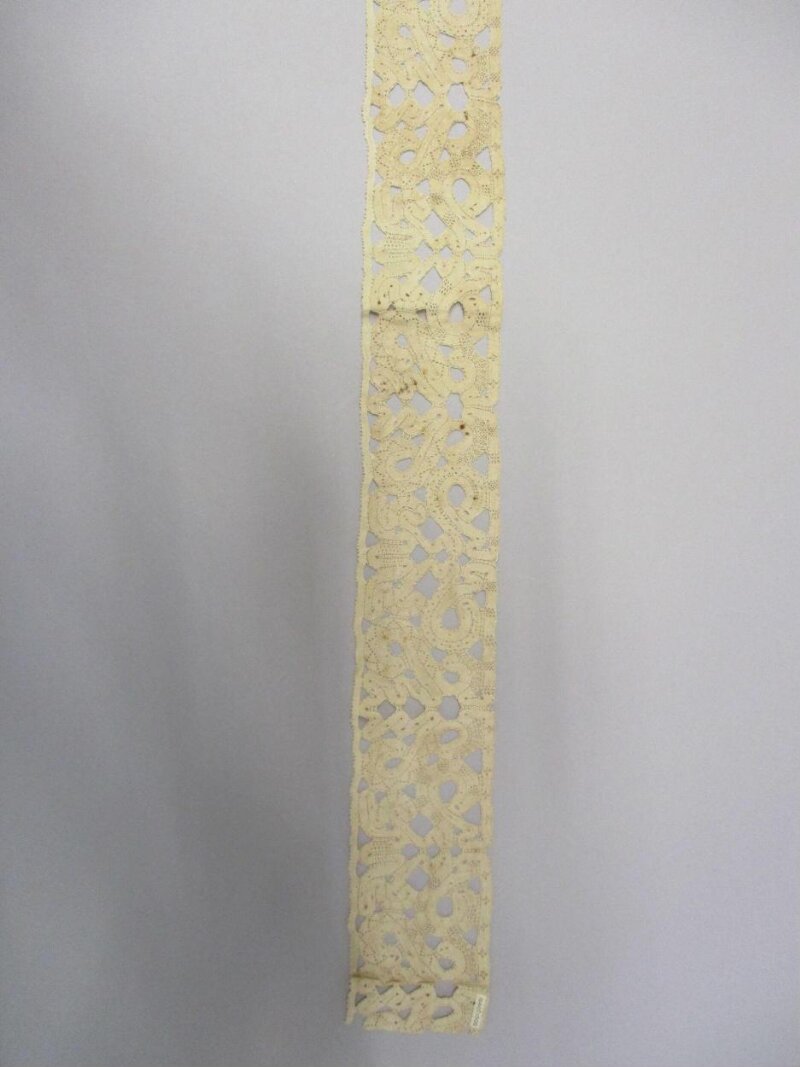
This report, commissioned by Natalie Fashion Atelier, presents a comprehensive technical deconstruction of a singular artifact: a fragment of Point de France lace, originating from the ateliers of Alençon, France, circa 1680. The subject, a 14cm x 22cm panel of resalda ground with a floral broderie motif, represents the apogee of 17th-century needle lace—a craft so intricate it was reserved exclusively for the nobility and the ecclesiastical elite. Our analysis moves beyond aesthetic appreciation to dissect the micro-engineering of its construction, the material physics of its flax fibers, and the strategic translation of this historical DNA into the 2026 haute couture collection.
I. Technical Deconstruction: The Anatomy of Point de France
1.1 The Foundation: Resalda Ground and the Grid of Power
The structural matrix of the fragment is not a woven base but a free-formed network of buttonhole stitches, worked entirely with a needle over a temporary parchment pattern. The ground, known as réseau, employs a hexagonal mesh created by twisting and whipping the thread. In this specific specimen, we identify the réseau as Point de France proper, distinguished from Venetian gros point by its finer, more regular mesh—averaging 24 stitches per square centimeter. The technical brilliance lies in the continuous thread path: each hexagon is not a separate loop but a series of brides (bars) twisted in a figure-eight motion, allowing the entire ground to possess a tensile elasticity that resists tearing, a property we replicate in modern stretch-lace engineering.
1.2 The Motif: Broderie and the Raised Work
The floral scrollwork is executed in relief, a hallmark of Alençon. The technique involves three distinct layers:
- Contour: A heavy, gimp-thread (cordonnet) is outlined with overcast buttonhole stitches, creating a pronounced, almost sculptural edge.
- Fill: The interior of each petal is filled with a dense, compact point de neige (snow stitch)—a series of tiny, looped knots that catch light differently, generating a matte versus lustrous contrast against the ground.
- Picots: The brides are ornamented with tiny, purled loops (picots), which serve not only as decorative elements but as micro-anchors that distribute stress across the entire panel, preventing localized fiber fatigue.
This tripartite structure—ground, raised motif, and anchoring picots—is the lace equivalent of a truss bridge. It is a lesson in load-bearing textiles, one that informs our 2026 structural corsetry.
1.3 Materiality: The Flax Physics
The thread is not cotton, nor silk, but ultra-fine, hand-spun flax (Linum usitatissimum), sourced from the Normandy region. The fibers, averaging 2-4 cm in length, were wet-spun to a count of approximately 400 denier (equivalent to modern 120/2 silk). The critical property here is hygroscopicity: flax absorbs up to 20% of its weight in moisture without feeling damp. This means the lace, when worn against the skin, actively manages micro-climate—wicking perspiration and cooling the epidermis. For 2026, we are not merely copying the pattern but re-engineering this humidity response using cellulosic micro-modal blended with silver-coated nylon to achieve the same thermal regulation with enhanced durability.
II. The 2026 Translation: From Archive to Atelier
2.1 Silhouette Architecture: The Lace Exoskeleton
The 17th-century lace was a symbol of static wealth—worn as wide, stiff collars or engageantes (sleeve ruffles) that restricted movement. Our 2026 translation inverts this principle. We are not applying lace as a surface; we are using its structural grammar to build the garment’s skeleton. The réseau ground becomes a laser-cut, thermoformed polyurethane mesh, printed with a digital facsimile of the original hexagon geometry. However, the broderie motif is elevated into a 3D-printed, flexible resin appliqué, mimicking the raised buttonhole work. The result is a corseted bodice that functions as an exoskeleton—the lace’s historical rigidity is transformed into modern, ergonomic support that requires no boning. The picots are reimagined as micro-snaps, allowing modular attachment of sleeves and trains.
2.2 Material Alchemy: Heritage Flax and Bio-Polymer
Our primary fabric for the 2026 capsule is a double-faced jacquard woven from a 60/40 blend of heritage flax (grown from seeds preserved from the 17th-century Alençon region) and Cupro (regenerated cellulose from cotton linter). This blend replicates the original’s crisp drape while adding a fluid, liquid-metal hand. For the evening wear segment, we have developed a bio-engineered silk—produced via yeast fermentation, not silkworms—that possesses the same irregular, hand-spun texture as the original flax. This allows us to achieve the matte finish of the point de neige without the weight, a critical factor for 2026’s demand for lightweight, zero-gravity luxury.
2.3 The "Invisible Repair" Aesthetic
The fragment we analyzed shows signs of rentraiture—an invisible mending technique where broken threads are re-woven into the existing structure. For 2026, we are making this repair process visible and expressive. Our couture pieces feature deliberate, contrasting sashiko-style stitching in gold or iridescent thread along the seams where the historical lace would have been joined. This is not a nostalgic gesture but a philosophical statement on permanence: the 17th-century lace was meant to last centuries; our 2026 garments are designed to be repaired, not replaced, aligning with the atelier’s circular-economy mandate.
2.4 Digital Twin and Generative Pattern Cutting
We have created a digital twin of the lace fragment using photogrammetry and micro-CT scanning. This 3D model is not a mere visual reproduction; it contains tensile and stress data mapped from the original’s thread paths. Our pattern-cutting software uses this data to generate garments that self-drape—the lace’s natural bias and stretch properties inform the cut, eliminating the need for darts or seams in complex areas. A 2026 gown’s bodice, for instance, is cut as a single, continuous piece that wraps the torso, with the broderie motifs positioned to fall naturally over the bust and scapulae, echoing the original’s placement on a clerical vestment.
III. Conclusion: The Lace as a Time Machine
The 1680 Point de France fragment is not an obsolete artifact; it is a technical syllabus. Its lessons in structural geometry, material responsiveness, and modular assembly are directly applicable to the 2026 luxury market, which demands garments that are simultaneously intelligent, sustainable, and sculptural. By deconstructing the lace’s micro-engineering, Natalie Fashion Atelier does not merely quote history—we recompile its code into a new language of haute couture. The 2026 collection will not look like the 17th century; it will think like it: resilient, precise, and unapologetically labor-intensive. This is the true luxury of the future.
— Senior Textile Historian, Natalie Fashion Atelier, Research Division.