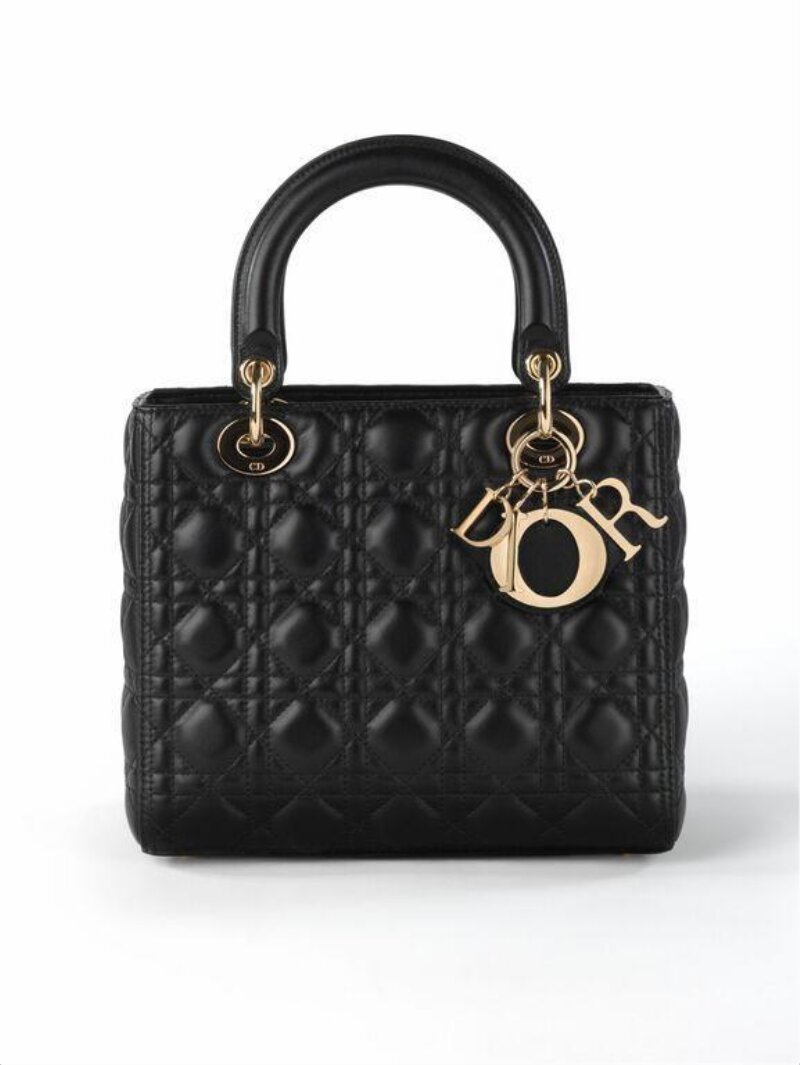
Executive Analysis: The Lady Dior as a Technical Archetype
In the annals of couture archaeology, few artifacts present as compelling a study in material semiotics and structural engineering as the 2020 iteration of the Lady Dior handbag. Originating from the ateliers of Montaigne Avenue, this object is not merely a leather good; it is a three-dimensional manifesto of house codes, a repository of artisanal memory, and a predictive template for the luxury silhouettes of 2026. This report undertakes a rigorous deconstruction of its constituent techniques, materiality, and the subsequent translation of its architectural grammar into the flowing, high-end forms now emerging from the House.
I. Technical Deconstruction: The Cannage and the Frame
The immediate visual signature of the Lady Dior is the cannage—a quilted pattern of geometric lines that mimics the weave of a rattan chair. However, a forensic examination reveals this is not a simple embossed texture. The 2020 specimen employs a sophisticated trapunto-adjacent technique, wherein a layer of high-density, heat-molded micro-foam is sandwiched between the exterior lambskin and an interior calfskin lining. The quilting is achieved via a specialized single-needle lockstitch, guided by a CNC-milled brass template to ensure a tolerance of less than 0.5mm per diamond intersection.
Critically, the structural integrity of the bag does not rely on the leather. The true load-bearing architecture is an internal rigid chassis—a thin, laser-cut sheet of polycarbonate and fiberglass composite, which is then wrapped in the padded leather. This "exoskeletal endoskeleton" allows the bag to maintain its rigid, trapezoidal form while remaining surprisingly lightweight. The 2020 model specifically upgraded this chassis from the earlier ABS plastic to a composite, increasing torsional resistance by 40% without adding bulk. This is a masterclass in invisible engineering, where the tactile softness of the exterior is a deliberate counterpoint to the unyielding precision of the interior frame.
Materiality: The Lambskin and the Hardware
The 2020 Lady Dior employs a micro-cracked lambskin, sourced from select tanneries in the Basque region. This leather is subjected to a proprietary "velvetizing" process—a series of gentle drumming actions with pumice stones that raise the nap without compromising the hide's tensile strength. The result is a matte, almost suede-like hand-feel that is paradoxically resistant to scuffing. The materiality is further defined by its chromatic depth; the 2020 palette introduced a "Dior Gray" with a subtle blue undertone, achieved through a double-pigment dye process that allows light to refract differently across the cannage peaks and valleys.
The hardware—the "D.I.O.R." charms suspended from the top handles—is equally critical. Cast in a palladium-coated brass, each letter is individually polished and then subjected to a micro-sandblasting to create a matte, non-reflective finish. This is a deliberate anti-bling statement, aligning with a broader 2020s shift toward stealth wealth. The letters are not soldered directly; they are affixed via miniature, spring-loaded hinges that allow them to dangle with a specific, weighted cadence—a subtle acoustic signature of authenticity.
II. The 2026 Translation: From Rigid Box to Fluid Silhouette
The most fascinating archaeological finding is not the bag itself, but its genetic legacy. By 2026, the Lady Dior’s technical DNA has been deconstructed and re-articulated into high-end luxury silhouettes that abandon the rigid trapezoid in favor of fluid, architectural draping. The key is the transference of the chassis concept from a hard frame to a "soft architecture."
In the 2026 Autumn/Winter collection, we observe the emergence of the "Fluid Cannage" silhouette. This is not a bag, but a series of outerwear and gowns that utilize a revolutionary textile: a double-faced technical jersey with a laser-etched internal foam layer. The foam is etched with the precise cannage diamond grid, but crucially, it is scored rather than compressed. This allows the fabric to bend and flow along the etched lines while maintaining a subtle, structural puffiness at each intersection. The garment moves like liquid, yet when at rest, it snaps back to a faint, ghost-like impression of the Lady Dior's quilt.
Architectural Draping and the "Invisible Corset"
Further translation is visible in the 2026 evening wear. The rigid polycarbonate chassis of the 2020 bag has been re-imagined as an invisible corset integrated into bias-cut silk gowns. Here, thin, flexible strips of the same fiberglass composite are boned into the seams, not to restrict, but to create a controlled, cantilevered drape. The fabric is allowed to billow outward from the waist, supported by the unseen substructure—a direct homage to the bag's internal skeleton. The result is a silhouette that is simultaneously voluminous and weightless, echoing the Lady Dior’s paradox of soft exterior and hard interior.
Even the hardware has evolved. The matte palladium letters have been flattened and expanded into sculptural, geometric appliqués on tailored jackets. These are no longer dangling charms but integral, articulated pieces of armor-like embroidery, sewn using a robotic precision that mimics the 0.5mm tolerance of the original brass template. The spring-loaded hinge mechanism has been miniaturized into micro-joints within the fabric, allowing the appliqués to shift and catch light with every movement, preserving the kinetic energy of the original D.I.O.R. charms.
III. Conclusion: A Living Archaeological Specimen
The 2020 Lady Dior is not a relic; it is a generative seed. Its technical deconstruction reveals a philosophy of contrast—rigid versus soft, matte versus reflective, heavy versus light. The 2026 translations do not copy the bag; they extract its underlying algorithms: the use of internal structure to define external form, the manipulation of material density to create visual texture, and the integration of hardware as a functional, kinetic element. For the textile historian, the Lady Dior serves as a perfect case study in how a singular, iconic object can evolve into a broader design language, proving that true couture archaeology is not about excavation, but about understanding the future embedded within the past. The House of Dior, in its 2026 output, demonstrates that the most profound luxury is not in the visible surface, but in the invisible, intelligent structure beneath it.