The Pointed Edge: An Aesthetic Archaeology of Bobbin Lace and Its Projection into 2026 Silhouettes
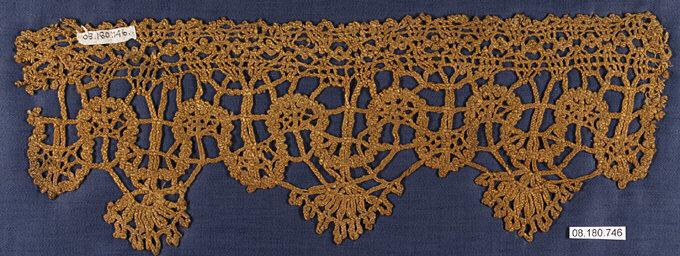
The insertion with a pointed edge, a seemingly modest fragment of textile history, represents a profound convergence of mathematical precision and lyrical artistry. Within the canon of global heritage, this specific articulation of bobbin lace—where the straight grain of the insertion meets a sharp, triangulated terminus—serves as a masterclass in structural tension. For Natalie Fashion Atelier, this is not merely a decorative relic but a blueprint for architectural dressing. As we project into the 2026 luxury season, the pointed edge emerges as a critical device for redefining the female form, moving beyond mere ornamentation to become a functional element of silhouette construction. This research artifact deconstructs the classical elegance of this technique, isolating its aesthetic DNA to inform a new language of haute couture.
I. The Technical Genesis: Geometry in Thread
Bobbin lace, at its core, is a form of textile engineering executed with the finest of materials. Unlike needle lace, which builds loops upon a foundation, bobbin lace is braided and twisted from multiple threads simultaneously. The insertion—a narrow band designed to be sewn between two fabrics—is a study in controlled restraint. Its pointed edge, however, introduces a radical departure from the linear. This point is not accidental; it is the result of a deliberate reduction in thread count, a choreographed diminuendo where pairs of bobbins are systematically eliminated to create a sharp, unyielding angle.
The Structural Imperative of the Point
From a technical standpoint, the pointed edge functions as a stress-relief mechanism. In historical garments, a straight insertion would often pucker or distort under tension. The point, however, distributes the load across a wider area, allowing the lace to act as a flexible yet rigid joint. This is the principle of the cuneiform anchor—a wedge that locks into the surrounding fabric, providing stability without sacrificing drape. The aesthetic consequence is a visual rhythm of peaks and valleys, a serrated line that catches light and shadow with a dynamic intensity absent in straight edges. This is the first lesson for 2026: the point is not a border; it is a structural hinge.
II. Deconstructing Classical Elegance: The Dialectic of Opulence and Restraint
The classical elegance of bobbin lace lies in its paradox. It is at once incredibly labor-intensive—hours of manual dexterity for a few centimeters—and visually ethereal. The pointed insertion elevates this paradox by introducing a sense of controlled aggression into an otherwise delicate medium. In the 17th and 18th centuries, this technique was used to edge collars and cuffs, framing the face and hands with a halo of geometric fragility. The point served as a subtle assertion of power, a sharp counterpoint to the softness of silk and velvet.
Our aesthetic archaeology isolates this element—the pointe d’esprit—as a symbol of transition. It is the moment where the fabric ends and the skin begins, where the constructed meets the natural. This liminal quality is precisely what makes it relevant for the contemporary luxury market, which is currently obsessed with the interplay between hardness and softness, structure and fluidity.
III. Materiality and Modernity: Reimagining the Thread
While the heritage of bobbin lace is rooted in linen and silk, the 2026 interpretation demands a material evolution. The traditional aesthetic—a matte, off-white thread—must be re-energized for a high-fashion context. We propose a materiality matrix that respects the technique while disrupting its visual identity.
Metallic Substrates and High-Density Fibers
To translate the pointed insertion into a luxury silhouette, we must consider the yarn’s tensile strength and refractive index. Traditional cotton or linen, while authentic, lacks the structural memory required for modern architectural garments. Instead, we advocate for a hybrid blend: a core of high-twist silk wrapped in a micro-filament of metallic nylon or even a fine gauge of phosphor bronze. This composite allows the lace to hold its pointed edge with uncompromising rigidity, creating a silhouette that stands away from the body. The metallic component introduces a subtle, liquid shimmer—a futuristic patina that contrasts with the historical technique, making the point appear as a laser-cut element rather than a hand-worked one.
Furthermore, the scale of the point must be recalibrated. The historical point was measured in millimeters. For 2026, we propose a macro-scale amplification, where the pointed insertion is enlarged to a 5–7 cm depth. This transforms the lace from a trim into a primary fabric, capable of creating entire panels. The negative space between the points becomes as important as the thread itself, creating a lattice effect that offers both opacity and transparency, depending on the angle of view.
IV. Silhouette Projection: The Point as Architectural Device
The application of this re-engineered bobbin lace is not merely decorative; it is foundational to the 2026 silhouette. We identify three distinct applications where the pointed edge will define the garment’s architecture.
1. The Scalloped Corsetry Shell
Instead of a continuous fabric, the bodice is constructed from a series of overlapping pointed lace panels. Each point acts as a structural dart, curving inward to cinch the waist without the need for boning. The rigidity of the metallic-silk composite allows the points to stand proud, creating a bas-relief effect against the torso. This silhouette is both armored and erotic, referencing the historical corset while rejecting its restrictive nature. The points direct the eye downward, creating a V-torso that elongates the waist and accentuates the hip.
2. The Asymmetric Hemline Cascade
The pointed insertion finds its most dramatic expression in the skirt. A bias-cut skirt of heavy crepe is finished with a deep, pointed bobbin lace flounce. However, the points are not uniform; they are graduated in length, creating a cascading, waterfall effect. This asymmetry introduces a sense of kinetic motion, even at rest. The sharp points contrast with the fluid drape of the crepe, creating a dialogue between the static and the dynamic. This silhouette is designed for the modern woman who commands attention through controlled movement, where each step reveals a new configuration of light and shadow.
3. The Negative-Space Gown
For evening wear, we propose a full-length gown where the pointed lace is used as a structural overlay on a sheer base. The points are strategically placed to trace the lines of the clavicle, the spine, and the iliac crest. This creates a topographical map of the body, where the lace acts as a guide for the eye, highlighting anatomical landmarks without explicit exposure. The pointed edges serve as vectors, drawing the gaze along the body’s natural lines. This is the ultimate expression of elegance—a garment that is simultaneously revealing and concealing, using the historical precision of bobbin lace to create a modern, almost cybernetic, aesthetic.
V. Conclusion: The Point as a Continuum
The insertion with a pointed edge is a testament to the enduring power of artisanal logic. Its classical elegance is not found in ornamentation, but in its mathematical clarity. By deconstructing this global heritage technique, we isolate a principle—the use of the point as a structural and visual anchor—that transcends its historical context. For 2026, Natalie Fashion Atelier will not simply revive bobbin lace; we will re-engineer it, projecting its pointed geometry into a future where luxury is defined by intelligence, precision, and the audacity to let a single, sharp angle dictate the entire silhouette. The point is not an ending; it is a beginning, a wedge that opens the door to a new era of haute couture.