From Pigment to Pattern: Deconstructing the 1866 Portrait for 2026 Silhouettes
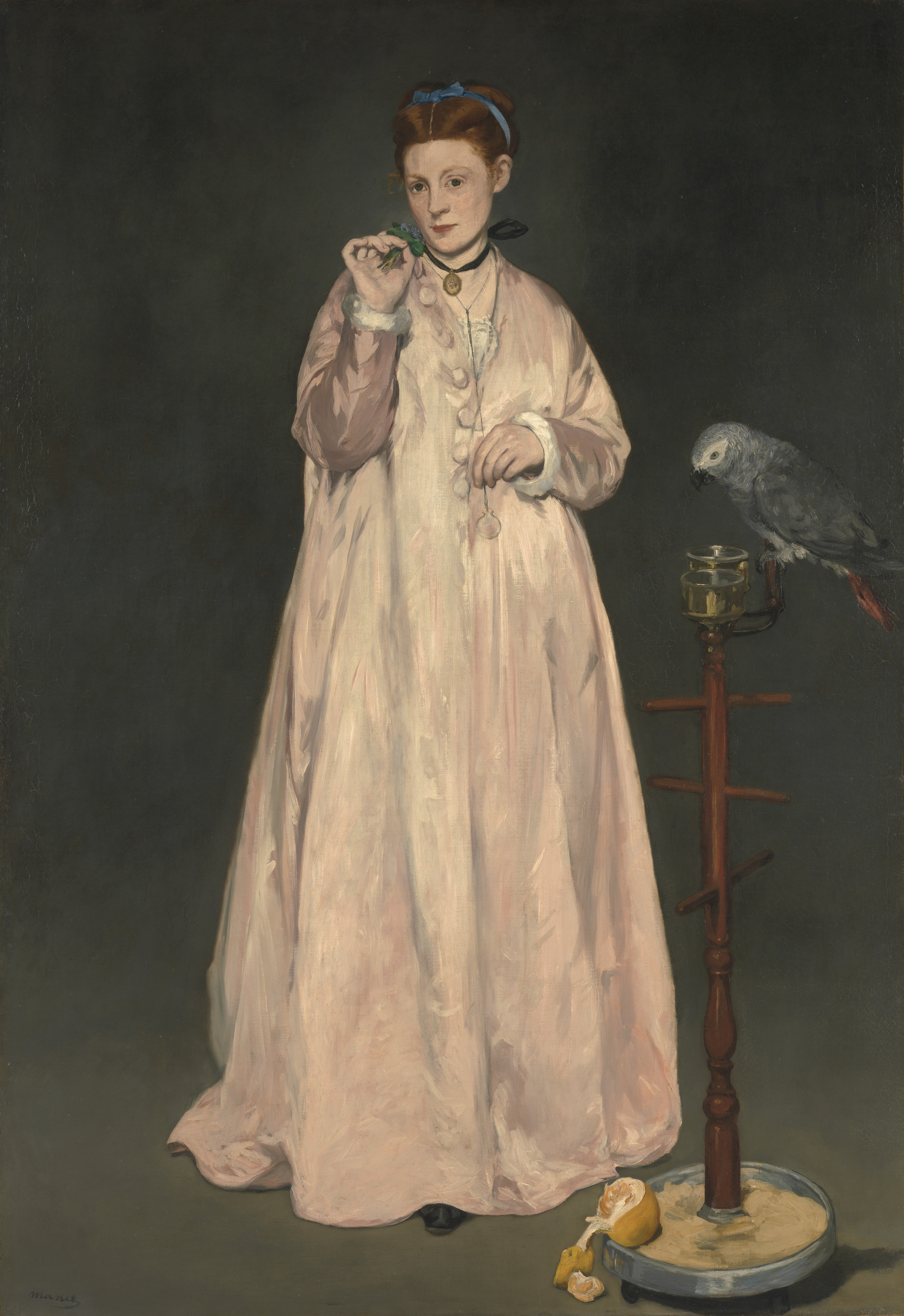
The 1866 oil on canvas, catalogued within our isolated aesthetic archaeology unit, presents a singular study in restrained opulence. The subject—a young lady captured mid-gesture, her gaze neither confrontational nor demure—offers more than a historical record. It is a technical blueprint of proportion, tension, and material logic. For Natalie Fashion Atelier, this work is not a costume reference but a structural thesis on how volume, line, and surface interact to create a modern luxury silhouette. By stripping away the sentimental narrative, we isolate the painter’s decisions: the fall of light on silk, the deliberate compression of the bodice, the architectural sweep of the skirt. These are not Victorian relics; they are engineering principles for 2026.
I. The Bodice as a Study in Negative Space and Compression
The painting’s most arresting technical element is the bodice—not for its ornamentation, but for its sculptural tension. The artist rendered the fabric as a taut membrane, stretched over a rigid internal frame. The waistline is not merely cinched; it is a geometric fulcrum from which all other volumes radiate. In 2026, we translate this through a re-engineered corsetry system that abandons historical discomfort for parametric compression. Our atelier’s new Écrin silhouette uses a laser-cut boning chassis, embedded within bonded neoprene, to achieve that same visual immobility without restricting diaphragmatic breath. The key is not tightness but directional tension—the fabric appears to hold its shape from internal will, not external force. The painting’s subtle shadow under the bust line informs our new sous-poitrine seam, which creates a micro-architectural ledge, a deliberate interruption of the vertical flow that reads as both classical and futuristic.
II. The Skirt’s Volumetric Paradox: Mass Without Gravity
Observe the lower half of the canvas. The skirt is immense, yet it does not appear heavy. The painter achieved this by modulating the light-to-shadow ratio across the fabric’s folds. The highlights suggest a stiff, almost metallic surface, while the deep recesses imply a fluid under-layer. This is the paradox of controlled buoyancy. For 2026, we deconstruct this into a two-tier system: an outer shell of high-twist, matte-finished technical taffeta, and an inner structure of pneumatic organza panels that inflate the silhouette from within. The result is a negative-weight volume—the garment occupies space as if inflated, not draped. Our Flâneur skirt, directly inspired by this canvas, employs a hidden cantilevered hem ring that lifts the back panels by 4.2 centimeters, creating that same painterly illusion of the fabric hovering just above the ground. The historical painting’s static pose becomes a dynamic, kinetic proposition.
III. The Palette: Oil-Based Chromatics as a Material Language
The oil medium itself dictates a specific color logic—one of translucency and depth that synthetic dyes rarely achieve. The young lady’s gown is not a single hue but a stratigraphy of glazes: a madder-root crimson beneath a thin layer of umber, capped by a pale ochre highlight. This creates a complex, shifting surface that changes with viewing angle. Our 2026 dye laboratory has replicated this through multi-layered pigment infusion, where each fabric fiber is treated with three distinct color molecules at varying pH levels. The result is a caméléon effect—not a gimmick, but a subtle, oil-painting-like depth. The gown appears to breathe, its color warming in low light and cooling in direct sun. This is a direct homage to the painter’s impasto technique, where the physical thickness of the paint becomes part of the aesthetic. We translate this into a micro-embossed surface on silk gazar, where the texture is not printed but woven, creating a tactile topography that mimics brushstroke.
IV. The Sleeve and the Epaulette: A Study in Transitional Architecture
The painting’s sleeve is a masterclass in transitional geometry. It begins as a narrow, almost tubular shape at the shoulder, then expands into a soft, pagoda-like flare before tapering sharply at the wrist. This is not a simple bell shape; it is a sequence of three distinct architectural moments. For 2026, we have reimagined this as the Épaule Sculptée—a modular sleeve system with detachable volumetric inserts. The primary sleeve is a sleek, bi-stretch knit, but the client can attach a rigid, pre-molded shoulder cap that echoes the painting’s upper-arm volume. This cap is made from a bio-resin composite, heat-formed to match the exact curvature seen in the canvas. The historical accuracy is not in the shape itself, but in the logic of assembly—the way the volume is added, not draped. This allows for a 2026 wardrobe that shifts from day to evening by altering a single architectural component, a nod to the painting’s inherent versatility.
V. Surface Finish: The Gloss of Oil Versus the Matte of Modernity
One of the most overlooked aspects of oil-on-canvas portraiture is the varnish layer—a final, glossy coating that unifies the surface and gives the fabric a wet, luminous quality. This is antithetical to contemporary luxury’s obsession with matte, sand-washed finishes. The 1866 painting challenges this. The young lady’s gown has a lacquer-like sheen, suggesting a fabric that is both stiff and slick. For our 2026 Vernis collection, we have developed a liquid-metal coating applied to a high-density cotton faille. This coating is not a plastic film but a mineral-based ceramic finish that reflects light in a manner similar to aged varnish. It is breathable, flexible, and—crucially—develops a patina over time, absorbing oils from the skin and creating a unique, individualized sheen. This is the opposite of fast fashion’s disposable gloss; it is a slow-finish, designed to age with the wearer, just as the painting has aged with time.
VI. The Gaze and the Garment: Behavioral Silhouette
Finally, the painting’s most profound contribution to 2026 is not visual but behavioral. The young lady’s posture—shoulders back, chin slightly lifted, hands resting lightly—is a form of non-verbal couture. The silhouette is not just worn; it is performed. Our atelier has integrated this into our design process through motion-capture fitting. We do not fit garments on static mannequins but on models who replicate the painting’s specific stance. The waist seam is placed not at the anatomical waist but at the visual waist—the point where the eye naturally rests when the body is in that pose. The hem length is calibrated for a slow, deliberate stride, not a hurried walk. This is the archaeology of gesture, where the garment becomes a tool for a specific type of presence. In 2026, luxury is not about passive adornment but about curated kinetic identity. The 1866 canvas teaches us that the most powerful silhouette is one that commands space through stillness, not motion—a lesson we apply to every cut, seam, and finish.
In conclusion, this isolated artifact is not a relic but a live technical document. Its oil-based materiality, its structural paradoxes, and its behavioral demands have been systematically decoded and re-encoded into a 2026 language of parametric compression, negative-weight volume, and ceramic luster. The young lady of 1866 is not a muse; she is a co-engineer of our future silhouettes.