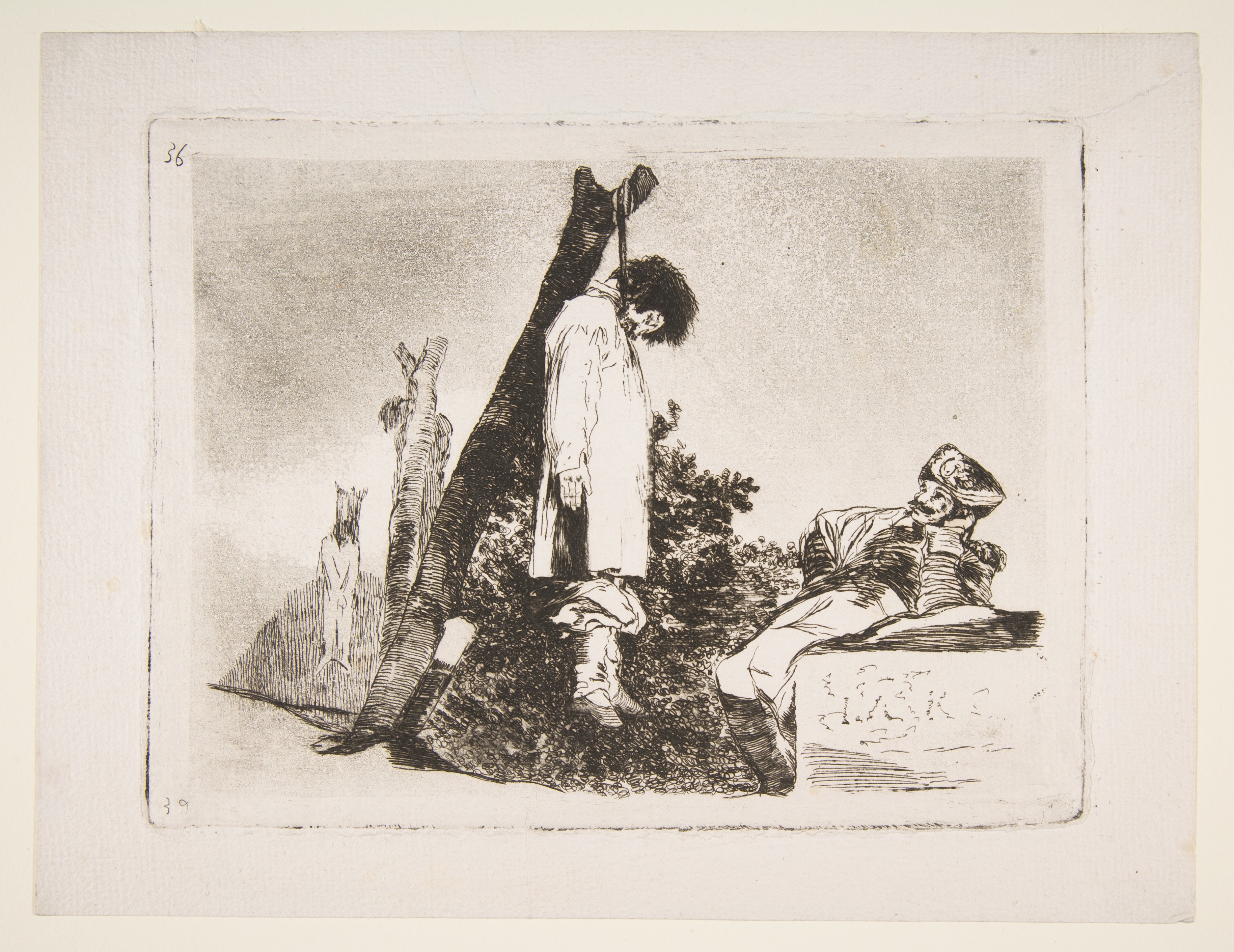
From Etched Darkness to Constructed Light: The Atelier’s Dialectic on Goya’s Plate 36
Within the hallowed archives of Natalie Fashion Atelier, we do not seek ornament; we seek tension. Our latest research artifact isolates Plate 36 of Francisco de Goya’s Los Desastres de la Guerra—titled Tampoco (Neither)—not as a document of horror, but as a masterclass in the architecture of absence. Removed from its historical trauma, the etching, burnished aquatint, and drypoint lines offer a radical blueprint for the 2026 haute couture silhouette. This is not a literal translation of suffering; it is a deconstruction of the classical body through the lens of negative space, abraded surface, and gravitational collapse. The atelier’s 2026 collection, L’Écho du Vide, is predicated on this very isolation of aesthetic archaeology—extracting formal principles from a plate that has been stripped of narrative, leaving only the brutal purity of line and tone.
I. The Archaeology of the Mark: From Burin to Bias
The technical genesis of our silhouette lies in the drypoint burr. Unlike the clean incision of engraving, drypoint throws up a delicate, irregular metal burr that holds ink with a velvety, volatile richness. In Goya’s Tampoco, this burr is not refined; it is left raw, creating a line that is simultaneously sharp and bleeding. For 2026, we translate this into our laser-cut seam construction on double-faced wool crepe. The seams are not hidden; they are exposed, their edges left deliberately unfinished to mimic the burr’s fibrous halo. This creates a silhouette that appears to be drawn directly on the body, where the garment’s structure is a continuous, unbroken etched line rather than a series of assembled panels.
Furthermore, the burnished aquatint—a technique used by Goya to create tonal gradients by scraping back the resin ground—informs our treatment of fabric weight. The burnish creates a smooth, almost metallic sheen against the porous, pitted darkness of the untouched aquatint. In our 2026 evening wear, this duality is achieved through thermoplastic pleating on silk gazar. We alternate between high-polish, heat-set folds (the burnished areas) and matte, crushed sections (the aquatint’s tooth). The resulting silhouette moves with a chiaroscuro rhythm, where light is not reflected but modulated by the garment’s surface, creating a volumetric illusion of depth without a single additional layer of fabric.
II. The Aesthetics of Collapse: Recalibrating the Classical Proportion
The figure in Tampoco is not upright. It is a study in gravitational surrender—a form that has lost its structural integrity, yet retains a haunting elegance in its fall. Classical couture has always championed the vertical, the corseted, the erect spine. Our 2026 silhouette inverts this canon. We introduce the asymmetric gravity-drape, where the primary mass of the garment is anchored low on one hip, creating a diagonal cascade that mimics the slumped, yet composed, posture of Goya’s subject. This is achieved through a complex system of internal counterweights—small, polished brass chains sewn into the hem of a bias-cut column—that force the fabric to fall in a controlled, deliberate non-linear trajectory.
This is not a rejection of structure, but a re-definition of it. The classical tailleur is deconstructed to its bare skeletal frame. We expose the internal architecture—the horsehair canvas, the steel boning—as an intentional design element, much like Goya’s exposed drypoint lines reveal the process of creation. The 2026 silhouette, therefore, is a visible construction, where the support system is as integral to the aesthetic as the outer shell. The shoulder is no longer padded but excavated, creating a concave slope that draws the eye downward, toward the garment’s unstable, yet deliberate, center of gravity. The result is a powerful, melancholic elegance—a body that has endured, not a body that performs.
III. Chromatic Abstraction: The Non-Color of Trauma
Goya’s palette in Tampoco is monochromatic, but it is far from simple. The interaction of the dark, velvety aquatint against the stark, unprinted paper creates a spectrum of non-colors: ash grey, graphite, bone, and the deepest, most absorbent black. For the atelier, this dictates a strict departure from the vibrant hues of previous seasons. The 2026 couture palette is anchored in archival neutrals: Noir Absolu (a matte, light-eating black), Papier Brûlé (a warm, scorched off-white), and Fer Forgé (a metallic grey with a dull, hammered finish).
These are not simply colors; they are material states. The Noir Absolu is achieved by dyeing a blend of virgin wool and modal with a special pigment that absorbs 98% of visible light, creating a flat, two-dimensional effect on a three-dimensional form. This volumetric flattening is a direct nod to the etching’s compressed spatial depth. Conversely, Papier Brûlé is used on a crisp, organza-like silk that is treated with a mineral wash, giving it a subtle, granular texture that catches the light in the same unpredictable manner as the aquatint’s resin pits. The silhouette is thus defined not by its shape alone, but by its surface’s dialogue with illumination—a silent, technical conversation between the garment and its environment.
IV. The 2026 Silhouette: A Taxonomy of Absence
We propose three distinct, yet interrelated, silhouettes for the upcoming collection, each derived from a specific formal element of the plate.
The Burr Jacket
An elongated, single-breasted jacket with a severe, dropped shoulder. The fabric is a heavy, double-faced wool with a frayed, burnt edge applied via laser. The lapels are not folded but cut away, leaving a void between the collar bone and the jacket’s body. This negative space is the couture equivalent of the drypoint’s uninked line—an absence that defines the form. The jacket is worn over a sheer, high-neck base in Papier Brûlé, creating a stark contrast between the solid, abraded outer shell and the fragile, luminous interior.
The Aquatint Gown
A floor-length, bias-cut gown in Noir Absolu. The fabric is a technical jersey that has been heat-stamped with a random, pitted pattern, replicating the aquatint’s tonal variations. The gown’s silhouette is deceptively simple, but its internal structure is complex: a series of hidden, curved seams create a subtle, spiraling tension that pulls the fabric close to the body on one side, then releases it into a deep, liquid pool on the other. This is the gravitational collapse made wearable—a garment that appears to be in a state of constant, elegant fall.
The Burnished Suit
A two-piece ensemble in Fer Forgé, consisting of a high-waisted, wide-leg trouser and a cropped, bolero-style jacket. The fabric is a smooth, polished wool with a lacquer-like finish, echoing the burnished areas of the plate. The jacket’s sleeves are detached, held in place by a single, visible hook at the shoulder, creating a deliberate dislocation in the classical suit’s architecture. The silhouette is sharp, precise, and metallic—a nod to the cold, unsentimental clarity of Goya’s line.
V. Conclusion: The Elegance of the Unfinished
In isolating Tampoco from its historical context, we uncover a universal principle of couture: elegance is not the absence of flaw, but the mastery of its presentation. The 2026 Natalie Fashion Atelier silhouette is not a garment of comfort or ease; it is a garment of intellectual tension. It borrows from Goya the courage to leave the mark visible, to expose the structure, and to allow the form to collapse with intention. This is the new luxury—not in opulence, but in the archaeological depth of a seam, the philosophical weight of a drape, and the silent, powerful narrative of a line that refuses to be perfected. The body within is not adorned; it is inscribed—a living plate, etched by the hand of time itself. This is the future of form, drawn from the ashes of the past.