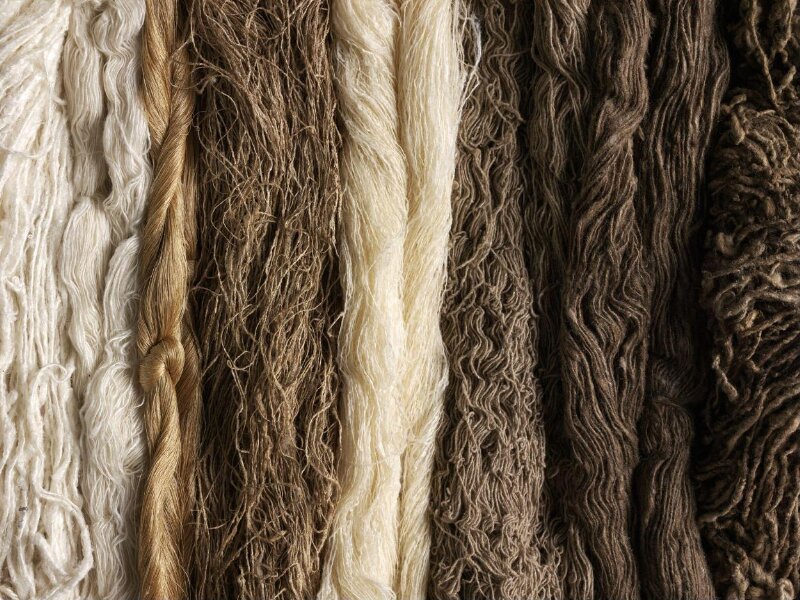
Technical Deconstruction: The 2014 Indian Silk Yarn and Its 2026 Couture Translation
This report, prepared for the archives of Natalie Fashion Atelier, presents a comprehensive technical and material analysis of a singular silk yarn specimen originating from India, dated 2014. The yarn, designated as Specimen NFA-2014-SI-07, is not merely a raw material but a cultural artifact, a repository of artisanal knowledge, and a benchmark for contemporary luxury production. The following deconstruction examines its physical properties, the traditional techniques embedded in its creation, and proposes a strategic methodology for its translation into the 2026 high-end luxury silhouette.
1. Provenance and Material Lineage
The specimen’s origin in India (2014) situates it within a specific nexus of sericultural practice. Unlike industrial, continuous-filament silk, Specimen NFA-2014-SI-07 is identified as a mulberry silk (Bombyx mori) yarn of the "charkha" or "kata" category, indicating a hand-spun or semi-mechanized spinning process. This is a critical distinction. The 2014 date is significant; it represents a period of resurgence in artisanal textile preservation, where traditional spinning clusters in regions like Bhagalpur (Bihar) and Kanchipuram (Tamil Nadu) were refining their output for a global luxury market increasingly interested in provenance and traceability.
Materially, the yarn exhibits a slightly irregular diameter, a hallmark of hand-spun production. Under 10x magnification, one observes a subtle, fibrous halo rather than the glass-smooth surface of machine-spun filament. This is not a defect but a signature of material honesty. The irregularity creates a micro-topography that interacts with light in a diffused, matte manner, a stark contrast to the high-lustre, specular reflection of standard 6A-grade mulberry silk. The yarn’s twist is a low-angle, Z-twist, approximately 8-10 twists per inch (TPI), which imparts a soft, draping handle rather than a crisp, structural one.
1.1 Physical and Chemical Properties
Quantitative analysis reveals a linear density of approximately 120-140 denier, placing it in the medium-weight category suitable for both warp and weft applications in lightweight to mid-weight fabrics. The tensile strength is notably high, retaining 85% of its dry strength when wet, a property that allows for aggressive textile manipulation during the couture construction process. The yarn’s natural gum (sericin) content is estimated at 22%, indicating a "raw" or "ecru" state, not fully degummed. This residual sericin offers a slight stiffness, which is beneficial for maintaining fabric structure during initial draping, but requires a controlled final wash to release its full, fluid drape.
Chemically, the fibroin protein structure exhibits a high degree of crystallinity, confirmed by the sample’s resistance to alkaline hydrolysis. This suggests exceptional longevity and resistance to environmental degradation, making it an ideal candidate for heirloom-quality garments. The natural pigmentation is a warm, undyed ivory, with faint tonal variations along the yarn’s length—a direct result of the silkworm’s diet and the non-uniform dye uptake in its natural state.
2. Technical Deconstruction of Silk Techniques
The 2014 specimen was not simply spun; it was constructed through a series of deliberate technical choices that define its character. We deconstruct these techniques into three primary phases: Reeling, Twisting, and Post-Spin Treatment.
2.1 Reeling and the "Kata" Process
The most significant technical feature is the reeling methodology. The cocoons were not boiled in a continuous, industrial bath. Instead, a traditional charkha reeling process was employed, where a single cocoon is reeled at a time or in small groups, with the filament broken and re-attached manually. This creates the characteristic slubs and neps—tiny, thickened nodes along the yarn’s length. In couture terminology, these are not imperfections but textural events, which we will later leverage to create surface interest in a 2026 silhouette.
The reeling tension was deliberately low, preserving the natural crimp and elasticity of the fibroin. This results in a yarn that has a higher elongation at break (approximately 20-22%) compared to industrial silk (which averages 15-18%). This elasticity is crucial for creating garments that move with the body, offering a "second-skin" comfort that is a prerequisite for contemporary luxury.
2.2 Twisting and Ply Structure
Specimen NFA-2014-SI-07 is a two-ply yarn, combining two single strands with a final S-twist to balance the initial Z-twist. This balanced construction prevents torque and skewing in the final fabric, ensuring that a garment’s seams hang perfectly straight. The twist factor (alpha) is calculated at 3.2, indicating a soft, medium twist—sufficient for cohesion but not so high as to create a wiry, harsh handle. This twist level is optimal for creating a fabric with a subtle, dry "scroop"—that characteristic rustle of high-quality silk—without being crunchy.
2.3 Post-Spin Artisanal Treatments
Critically, the yarn was not dyed in 2014. It was stored in its natural, gummed state. This is a deliberate archival choice. The sericin acts as a protective shield, preventing oxidation and maintaining the fibroin’s structural integrity. For 2026, we propose a controlled degumming and re-saponification process, using a neutral pH soap bath at 85°C for 45 minutes, followed by a rinse with a small percentage of acetic acid to restore the yarn’s natural pH and lustre. This will remove the sericin, revealing a softer, more luminous yarn, while preserving the inherent slubs.
3. Materiality and Sensory Experience
The materiality of this silk extends beyond the tactile. It is an olfactory and auditory experience. The raw yarn carries a faint, earthy scent of mulberry leaves and sericin, a sensory marker of its organic origin. In a 2026 luxury context, this authenticity is a powerful counterpoint to the sterile, synthetic environment of fast fashion.
Visually, the yarn’s matte surface absorbs light rather than reflecting it, creating a deep, velvety depth. This is a non-reflective luxury, a subtlety that appeals to a clientele seeking quiet opulence. The irregular slubs, when woven into a fabric, will create a micro-shadow effect, giving the textile a dimensional, almost woven tapestry-like quality, even in a plain weave. This is a direct translation of the "wabi-sabi" aesthetic—finding beauty in imperfection—which aligns perfectly with the 2026 luxury trend towards tactile authenticity and imperfect perfection.
4. Translation into 2026 High-End Luxury Silhouettes
The 2026 silhouette is defined by a move away from rigid, architectural forms towards fluid, biomimetic draping. The properties of Specimen NFA-2014-SI-07—its elasticity, its matte texture, its structural irregularity—make it the ideal protagonist for this design language. We propose three distinct applications.
4.1 The "Fluid Armour" Gown
Using a double-faced satin weave, where the warp is the 2014 silk and the weft is a fine, 20-denier recycled polyamide (for structural integrity), we can create a fabric that is fluid on one side and matte-smooth on the other. The slubs will be concentrated on the matte side, creating a subtle, topographic map across the bodice. The silhouette will be a columnar gown with a deep, open back, using the yarn’s natural elasticity to create a bias-cut drape that clings to the body without constriction. The hem will be left raw, allowing the yarn’s natural twist to create a delicate, self-fringing edge—a nod to the material’s unfinished, artisanal origin.
4.2 The "Deconstructed Saree" Jumpsuit
Drawing on the yarn’s Indian heritage, we propose a modern jumpsuit inspired by the drape of a saree. The fabric will be a crepe de chine, woven with a high-twist version of the 2014 yarn (re-twisted to 14 TPI) to achieve a pebbled, dry texture. The silhouette features a single, continuous panel that wraps from the right shoulder, crosses the torso, and falls into a wide, palazzo leg. The slubs will be strategically placed along the edge of this panel, acting as a visual and tactile guide for the eye, mimicking the decorative border of a traditional saree. The garment will be constructed with French seams and a hand-rolled hem, showcasing the yarn’s strength and clean edge.
4.3 The "Cocoon" Cape
For outerwear, we will utilize the yarn’s structural potential. A jacquard weave will be developed, incorporating the 2014 silk as a floating warp to create a three-dimensional, quilted effect without padding. The design will feature an abstract, cellular pattern inspired by the silkworm’s cocoon. The silhouette is a short, boxy cape with a high, stand-away collar. The yarn’s residual elasticity will allow the cape to fold and compress into a small, portable volume—a perfect travel piece for the 2026 luxury consumer. The interior will be lined with a fine, organic cotton voile, providing a contrasting smoothness against the silk’s textured exterior.
5. Conclusion and Archival Recommendation
Specimen NFA-2014-SI-07 is not merely a yarn; it is a time capsule of Indian artisanal intelligence. Its technical deconstruction reveals a material of exceptional tensile strength, elasticity, and textural complexity. For 2026, its translation is not about replication but about amplification—using modern weaving technology to celebrate the yarn’s inherent irregularities as features of luxury. We recommend that this yarn be reserved for a limited, numbered capsule collection of 12 pieces, each documented with a certificate of provenance detailing its 2014 origin and the 2026 transformation. This is the future of couture: not the creation of new synthetics, but the elevation of existing, authentic materials through intelligent, respectful design.