Deconstructing the Celestial: An Aesthetic Archaeology of the Angelic Form for 2026
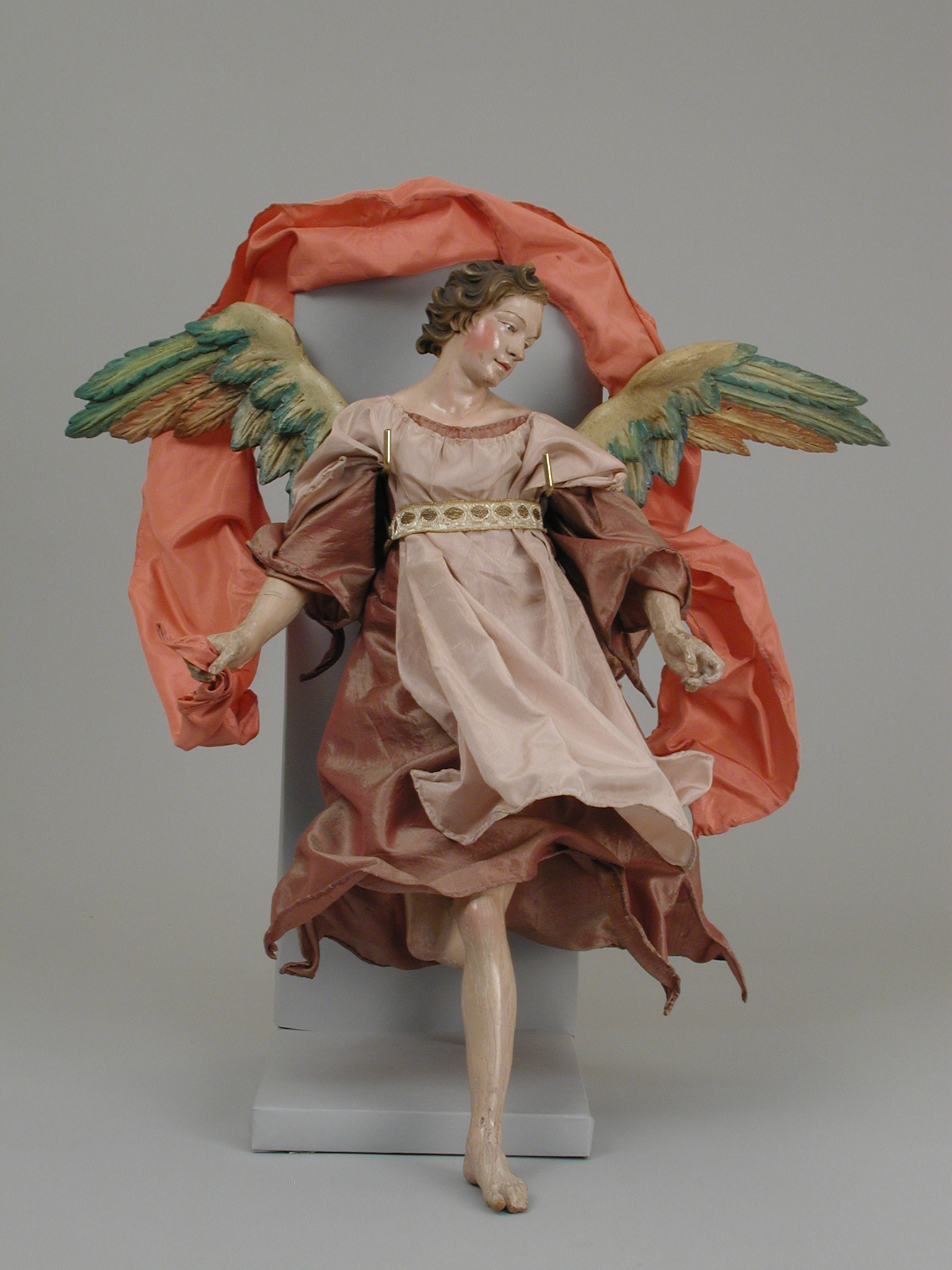
The isolated artifact before us—a polychromed terracotta head, articulated wooden limbs, wings of carved timber, and a torso of wire wrapped in tow, clad in remnants of varied fabrics—presents a profound paradox. It is at once a relic of divine representation and a testament to earthly, almost utilitarian, construction. For Natalie Fashion Atelier, this angel is not a symbol of ethereal purity but a blueprint for structural honesty. In 2026, the luxury silhouette must abandon the facile softness of draped divinity and embrace the architectural tension between the celestial ideal and the tangible scaffold. This artifact instructs us to build garments that reveal their internal logic, where fragility is a deliberate choice, and where the body becomes the armature for a new kind of sacred geometry.
I. The Polychromed Visage: Chromatic Authority and the New Palette
The terracotta head, with its surviving polychromy, offers the first critical directive. The pigments—faded ochres, deep umbers, and traces of vermilion—are not decorative; they are territorial markers of light. For 2026, we reject the monochromatic purity that has dominated minimalism. Instead, the couture palette will draw from the weathered patina of the artifact. We are introducing a spectrum termed Terracotta Lumière: a range of burnt sienna, clay pink, and oxidized bronze that appears to have been baked into the fabric itself.
From Pigment to Textile
This is not a simple color story. The materiality of the pigment informs the finish. We will employ double-faced wool crepes where the outer layer is dyed in a matte, almost chalky finish reminiscent of the terracotta’s porous surface, while the inner layer is a high-gloss, lacquered silk. This interplay creates a dynamic chromatic shift with movement, mirroring how the artifact’s painted surface catches and absorbs light differently across its contours. The 2026 silhouette will be defined by this volumetric color, where the hue is not flat but possesses depth, as if the garment has been excavated from a historical stratum.
II. The Wooden Limbs and Wings: Articulated Structure and the Exoskeletal Silhouette
The most radical departure for 2026 lies in the interpretation of the wooden limbs and wings. These are not organic appendages; they are precision-cut, engineered components. The wings, in particular, are not feathered softness but a series of interlocking wooden panels, suggesting a mechanical capacity for flight. This directly informs our new structural language: the Exoskeletal Silhouette.
The Couture Armature
We will deconstruct the traditional shoulder and hip lines, replacing them with visible, articulated boning that extends beyond the body’s natural perimeter. Think of a tailored jacket where the sleeve head is not a smooth curve but a series of scalloped, rigid panels that echo the wing’s segmentation. These panels, crafted from molded horsehair and lacquered cotton, will be attached via exposed metal joinery—not hidden, but celebrated as a design feature. The limb itself becomes a study in contrast: a tightly fitted, bias-cut sleeve of fluid silk (the tow-wrapped body) that is then encased within a rigid, wooden-toned cuff that flares outward like a wing’s primary feather. This creates a silhouette of controlled expansion, where volume is not draped but engineered to project from the body at precise, architectural angles.
Kinetic Articulation
The wooden limbs of the artifact suggest movement, even in stillness. Our 2026 designs will incorporate kinetic hinges at the elbow and shoulder. This is not costuming; it is haute couture mechanics. A gown’s train will be constructed of hinged, rigid panels that can be folded up and secured to the waist, transforming a cathedral-length silhouette into a cocktail-length one with a single, deliberate gesture. The wearer becomes the animator of the structure, and the garment’s true form is revealed only through motion, much like the angel’s wings are understood only when imagined in flight.
III. The Wire and Tow Torso: The Poetics of the Unfinished
Beneath the vestments lies the core: a body of wire wrapped in tow. This is the raw, unadorned truth of the artifact. It is the anima, the structural ghost. For 2026, this translates into a revolutionary approach to the undergarment and the lining. We will invert the hierarchy of couture, making the internal structure the primary aesthetic.
Visible Construction as Luxury
The 2026 silhouette will feature gowns where the outer shell is deliberately slashed, perforated, or constructed of translucent organza, revealing a meticulously crafted interior of corsetry that mimics the wire and tow. This internal corset will not be a rigid cage but a supple, flexible mesh of silk-wrapped steel and raw hemp, echoing the tow’s fibrous texture. The seams of the outer garment will be left raw, the edges frayed, suggesting that the garment is perpetually in a state of becoming. This is the poetics of the unfinished—a deliberate aesthetic choice that elevates the process of creation to the level of the final product. The luxury lies not in the concealment of effort, but in the revelation of the artisan’s hand and the material’s intrinsic integrity.
IV. The Fabric Remnants: A Patchwork of Memories
The final element—the various fabrics adorning the body—is a lesson in material pluralism. These are not a unified textile; they are fragments of different lives, different eras, different functions. This informs a 2026 couture strategy of curated juxtaposition.
Textile Alchemy
We will move beyond simple mixing and matching. The new silhouette will be constructed from engineered patchworks, where panels of antique lace, technical neoprene, hand-woven silk, and bonded leather are joined not by smooth seams but by visible, decorative topstitching that references the artifact’s binding. This is not a nostalgic pastiche; it is a strategic dialogue between epochs. A tailored trouser will feature a front panel of crisp, modern wool gabardine, while the back panel is a draped, fluid crepe from a deadstock lot of the 1920s. The result is a silhouette that is asymmetrical in weight and drape, creating a dynamic, almost off-kilter balance that is inherently modern. The garment becomes a repository of textile memory, each fragment contributing to a composite identity that is both fractured and cohesive.
V. Synthesis: The 2026 Angelic Silhouette
The 2026 Natalie Fashion Atelier silhouette, derived from this angelic archaeology, is not a costume. It is a philosophical statement on the nature of construction. It is defined by a high, structured shoulder that evokes the wing’s root, an hourglass torso that is not cinched by a belt but articulated by an external, visible corset, and a narrowing, tapering lower half that grounds the figure, contrasting the expansive upper body.
This silhouette is paradoxical: it is heavy yet appears weightless, rigid yet is highly mobile, ancient yet utterly futuristic. The palette is earthen, the textures are raw, and the construction is exposed. The wearer of this 2026 couture is not adorned; she is architecturally inhabited. She carries the artifact’s history not as a burden, but as a source of structural power. The angel, in our hands, is not a messenger of the divine, but a messenger of the possible, demonstrating that true luxury lies in the honest, masterful, and deeply considered construction of the human form. The tow and wire are not hidden; they are the very soul of the new elegance.