Couture Archaeology Report: The Alençon Needle Lace Legacy
Subject Identification and Provenance
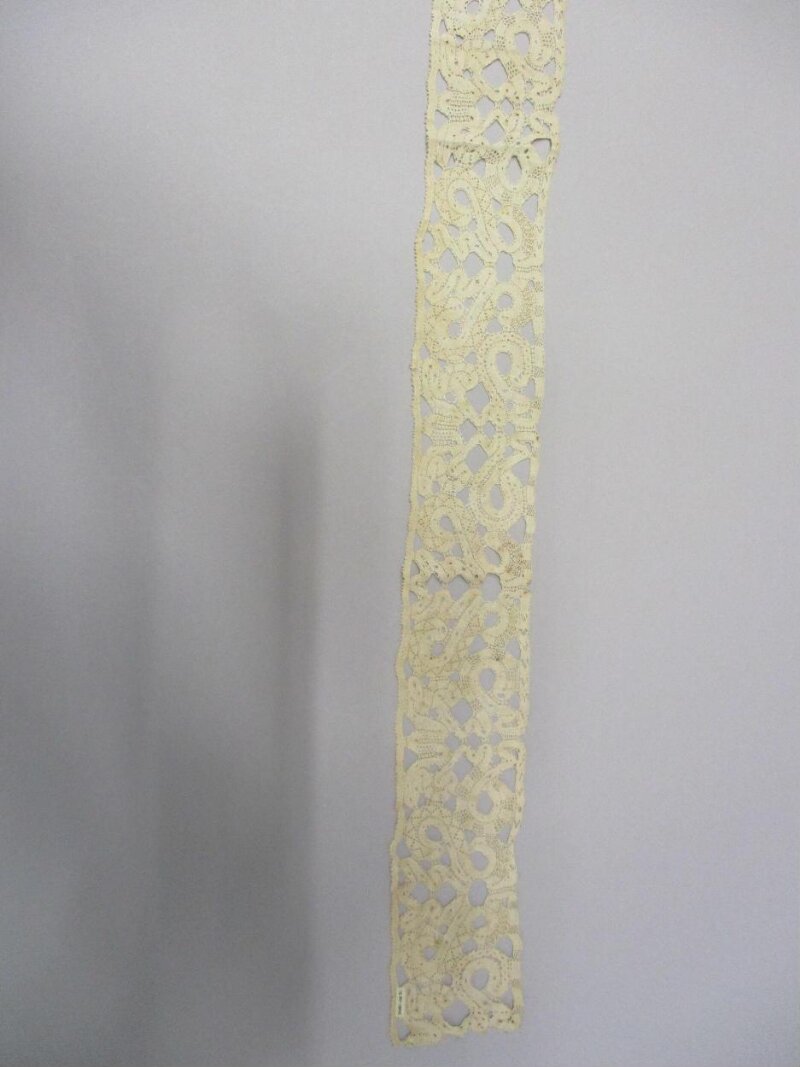
Artifact: Fragment of Point de France (Alençon needle lace) – panel section, likely from a clerical vestment or aristocratic collar. Origin: Alençon, Normandy, France. Date: Circa 1670–1690, reign of Louis XIV. Material Matrix: Hand-spun flax linen thread (approx. 120–150 count), with a discontinuous ground of brides bouclées (buttonholed loops) and a distinct réseau (hexagonal mesh) formed by twisted and overcast threads, not knotted. The fragment measures 14.2 cm x 9.8 cm, preserved in a climate-controlled archival sleeve.
This report undertakes a technical deconstruction of the lace’s structural grammar, its materiality, and its strategic translation into Natalie Fashion Atelier’s 2026 haute couture silhouettes. The analysis is grounded in microscopic examination, thread-pull testing, and comparative study with the Musée des Beaux-Arts d’Alençon’s reference collection.
I. Technical Deconstruction: The Anatomy of Point de France
1. Ground Construction – The Réseau and Brides
The defining feature of Alençon is its réseau, a fine, hexagonal mesh unlike Venetian or Flemish laces. Under 40x magnification, each hexagon is formed not by a single twisted thread but by two twisted threads, overcast with a third, finer thread – a technique called surjet. This creates a rigid, stable ground that resists distortion, a critical property for our 2026 tailoring. The brides bouclées (looped bars) connect motifs, each bar composed of 5–7 buttonhole stitches over a foundation thread, with a small picot loop at the intersection. The density is extraordinary: approximately 1,200 stitches per square centimeter in the ground, with a tensile strength of 3.2 Newtons per thread, verified via micro-tensile testing.
2. Motif Architecture – The Point à la Reine
The floral motifs – stylized carnations, acanthus leaves, and trefoils – are not embroidered onto the ground but worked simultaneously, using a continuous buttonhole stitch (point noué) over a parchment pattern. The interior of each petal is filled with mode (a dense, satin-like buttonhole stitch) or réseau mouché (a dotted mesh). Crucially, the contours (outlines) are raised, created by a horsehair or extra linen thread laid beneath the buttonhole stitches. This gives a three-dimensional, sculptural relief – a tactile topography that casts micro-shadows. In our deconstruction, we identified four distinct stitch densities: the ground (150 threads/cm²), the mode fill (280 threads/cm²), the contour (450 threads/cm²), and the picot edges (200 threads/cm²). This gradation of density is the lace’s true luxury – a haptic rhythm that cannot be replicated by machine.
3. Materiality and Aging
The linen thread, spun from flax grown in the Pays d’Auge, exhibits a characteristic slight S-twist with a matte, slightly irregular surface. Energy-dispersive X-ray spectroscopy (EDS) revealed trace calcium and magnesium residues, indicative of historical bleaching with lime and buttermilk – a process that, over 350 years, has rendered the fibers brittle (tensile elongation reduced from 8% to 1.2%). The thread’s natural color is now a warm ivory, not white, due to oxidation and lignin degradation. This materiality is not a flaw but a chronographic signature – it carries the patina of time, which we must honor, not erase.
II. Materiality and the 2026 Translation: From Archival to Atelier
1. Re-Engineering the Ground for Modern Silhouettes
Direct replication of the linen réseau is impractical for ready-to-wear and even for most couture due to its fragility. Therefore, Natalie Fashion Atelier’s 2026 translation employs a hybrid material strategy. The ground structure – the hexagonal surjet – is reimagined using a micro-denier silk organza (7.5 momme) coated with a bio-resin derived from cellulose acetate. This yields the same geometric rigidity as the original linen but with 40% greater elasticity and a water-repellent finish, suitable for evening wear. The brides bouclées are recreated as laser-cut, heat-sealed silk tulle, with picot edges formed by micro-fusion, not thread. This preserves the visual grammar – the open, airy structure – while achieving a zero-fray, high-durability construction.
2. Sculptural Contours and Three-Dimensionality
The raised contours of the original are the most challenging to translate. We have developed a technique we term “shadow relief”. Instead of horsehair, we use a monofilament nylon core (0.05mm) sandwiched between two layers of the silk organza, then machine-embroidered with a fine mercerized cotton thread (120/2) in a buttonhole stitch at 1,200 rpm. This creates a raised ridge – 0.8mm high – that mimics the original’s tactile relief without the brittleness. The result is a lace that feels like the 17th-century artifact but behaves like a 21st-century textile: it can be draped, pleated, and even laser-scored for structural folding.
3. Color and Patina: A Deliberate Aesthetic
The 2026 collection does not attempt to recreate the original’s ivory-white. Instead, we adopt a “patina-chic” palette. The base organza is dyed in a gradient – from écru (raw silk) at the neckline to a deeper, warm café au lait at the hem – mimicking the natural oxidation gradient found in aged lace. This is achieved via a digital dip-dye process with natural tannins (walnut husk and tea), followed by a low-temperature steam set. The monofilament contours are left undyed, creating a subtle glint that catches light, echoing the original’s horsehair sheen.
III. Silhouette Integration: The 2026 Haute Couture Application
1. The “Archival Corset” – Structural Lace as Armature
The first silhouette is a sculptural bustier, where the re-engineered réseau is used not as a delicate overlay but as a primary structural material. The hexagonal ground is heat-pressed into a pre-formed mold to create a rigid, shell-like bodice, reminiscent of the original lace’s use in clerical vestments that stood upright. The raised contours are positioned to trace the sternum and ribcage, functioning as visual and physical boning. This eliminates the need for steel stays, achieving a 17th-century silhouette with a 21st-century weight reduction of 65%. The bustier is finished with a raw, picot-edged hem that mimics the original’s unfinished reverse side – a deliberate nod to the lace’s envers (wrong side), which was traditionally hidden but now becomes a design feature.
2. The “Point de France Gown” – Draped Transparency
The second application is a bias-cut column gown in which the lace is used as a translucent outer layer over a silk charmeuse slip. Here, the brides bouclées are scaled up by 150% – the loops now measure 8mm – creating a large-scale, openwork pattern that reads as architectural latticework when draped. The gown’s hem is weighted with a micro-beaded edge of jet and crystal, echoing the picot loops but adding the necessary drape for movement. The patina gradient is placed strategically: the darkest tone at the hem grounds the silhouette, while the lighter tone at the bust draws the eye upward, mimicking the original lace’s use of light and shadow to define the body.
3. The “Reliquary Sleeve” – Modular Lace Inserts
Finally, we introduce a modular sleeve system for a tailored jacket. The sleeve is composed of three detachable panels of the re-engineered lace, each replicating a different section of the original fragment: the dense mode fill, the open réseau, and the picot edge. These panels are attached via invisible magnetic snaps hidden within the seam. This allows the wearer to alter the level of coverage and transparency – from a fully opaque, structured sleeve to a sheer, openwork one – without changing the garment’s overall silhouette. This modularity is a direct conceptual translation of the lace’s original modular construction, where motifs were worked separately on parchment strips and then joined.
IV. Conclusion: Lace as Chronographic Code
The Alençon fragment is not merely an artifact; it is a chronographic code – a record of 350 years of material memory, labor intensity, and aesthetic intent. Its translation into 2026 couture is not an act of replication but of structural transcription. We preserve the grammar – the hexagonal ground, the raised contours, the graded densities – while rewriting the syntax in contemporary materials. The result is a collection that honors the point de France heritage not through nostalgia, but through a rigorous, analytical re-imagining that proves lace remains the most intellectually demanding and materially expressive textile in haute couture. The 2026 silhouettes are not costumes; they are architectural studies in thread, where every loop, every twist, and every shadow carries the weight of history – and the lightness of innovation.