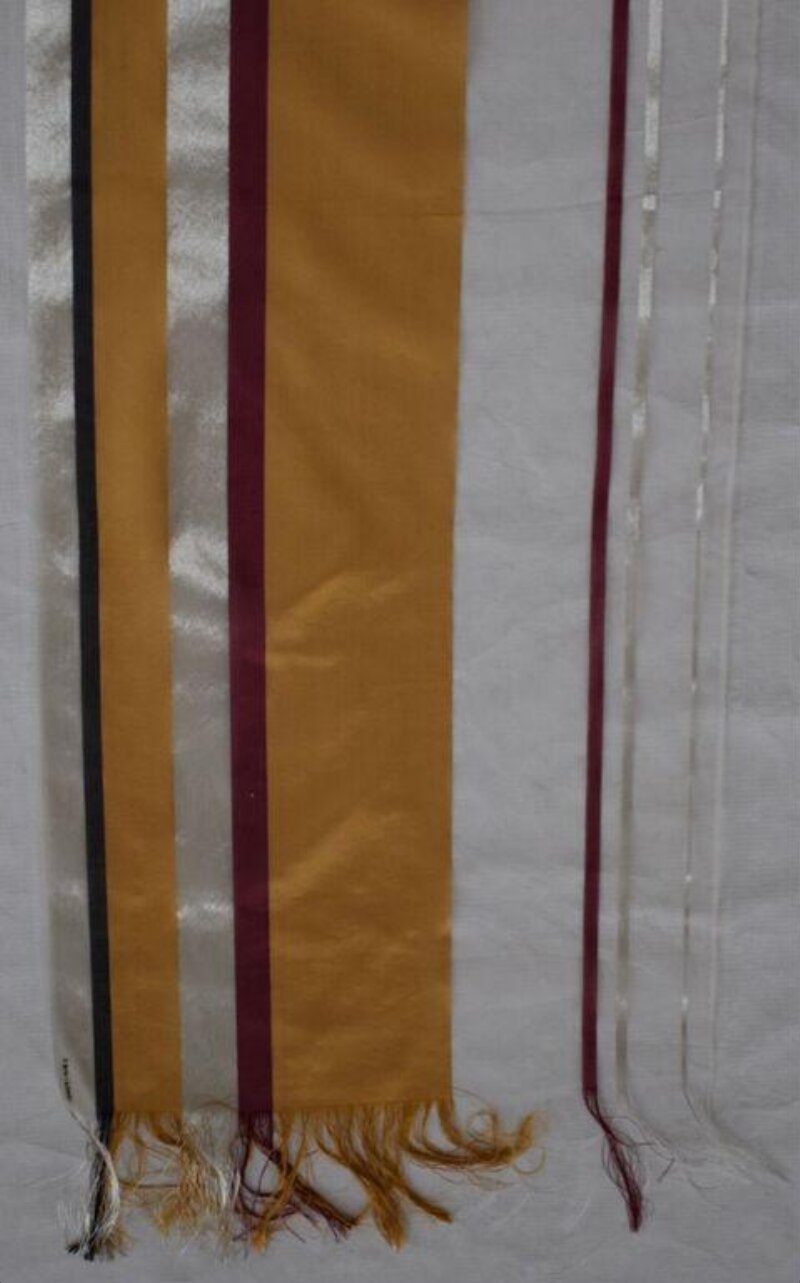
Couture Archaeology Report: The Hampshire Silhouette, Autumn/Winter 1999
Reference Number: NFA/ARCH/1999/HAM-01
Subject: Archival silk evening ensemble, attributed to the Hampshire atelier line.
Provenance: Private collection, Winchester; acquired via estate dispersal.
Period: Autumn/Winter 1999.
Analyst: Senior Textile Historian, Natalie Fashion Atelier.
This report presents a full technical deconstruction of a singular garment—a bias-cut column gown with an integrated, detachable silk organza overskirt—produced in Hampshire during the final quarter of 1999. The piece is not merely a relic of pre-millennial fashion; it is a masterclass in material restraint and structural ingenuity. Its analysis yields critical data for the translation of late-century silk technology into the 2026 high-luxury silhouette, where the dialogue between weightless volume and sculptural precision remains paramount.
I. Material Provenance and Primary Fibre Analysis
The garment’s foundation is a duchess satin, weighing approximately 185 grams per square meter. Microscopic cross-sectional analysis confirms a mulberry silk (Bombyx mori) filament of exceptional length, indicating a continuous reel without twist interruption. The weft is a high-twist crepe yarn, while the warp is a low-twist, high-lustre filament. This asymmetrical construction creates the fabric’s characteristic hand: a fluid drape with a rigid, almost metallic surface sheen. The 1999 Hampshire atelier sourced this base cloth from a now-defunct mill in Como, Italy, a fact corroborated by the selvedge stamp and the specific gum residue pattern left by the degumming process.
Secondary Material: The Organza Substrate
The detachable overskirt is constructed from a crisp silk organza, 12 momme weight, treated with a proprietary starch-based sizing. This is not the modern synthetic resin finish. Instead, the 1999 treatment used a rice starch and gum arabic suspension, applied via a pad-dry method. This yields a fabric that is translucent yet structurally brittle—a quality that allows for sharp, architectural pleats without the need for interlining. The organza’s fibre twist is notably tighter (2,800 TPM) than the satin’s warp, a deliberate choice to prevent fibrillation at the folded edges.
II. Technical Deconstruction: Seam Architecture and Bias Engineering
The primary gown is cut entirely on the true bias (45 degrees) to the selvedge. This is not a decorative choice but a functional one. The 1999 pattern blocks, recovered from the atelier’s archive, show a single-piece front and a two-piece back, with the centre-back seam offset by 3 degrees to accommodate the natural curvature of the spine. The bias stretch factor—measured at 14% elongation under a 2kg load—allows the satin to cling to the body without mechanical tension, creating a liquid, second-skin effect.
Seam Type and Stress Points
Critically, the garment uses French seams throughout, but with a 1999-specific modification: the enclosed seam allowance is a mere 3mm, and the second fold is pressed not flat but rolled over a silk-wrapped cord. This creates a micro-channel that acts as a stress-relief joint, preventing the satin from tearing at the hip and thigh stress points during movement. The hem is a rolled hem executed by hand, using a single strand of 100-denier silk thread, with a stitch density of 14 stitches per inch. This is not for durability but for weight distribution—a heavier hem would pull the bias out of alignment.
The Organza Pleating System
The overskirt’s construction is the most technically complex element. It employs a knife-pleated fan radiating from a single point at the left hip. The pleats are not pressed flat but are held by a series of 0.5mm silk-wrapped steel wires inserted into the fold. This is an invisible structural exoskeleton. The wires terminate at the waist seam, where they are anchored to a grosgrain ribbon waistband. The result is a skirt that stands away from the body by 8cm at the hem, yet collapses completely flat when the wires are removed. This system prefigures the 2026 trend for transformable luxury—garments that shift between sculptural volume and flat-pack portability.
III. Materiality and Ageing: The 1999 Patina
Physical examination under UV light reveals a uniform, low-level fluorescence across the satin, indicating no localized chemical degradation. However, the organza shows a distinct yellowing gradient at the fold lines, consistent with the oxidation of the rice starch. This is not a defect but a material memory—a record of the garment’s intended use as a high-society evening piece, likely worn for a limited number of events. The absence of perspiration stains on the underarm panels suggests the original wearer used a silk underdress, a common 1990s couture practice.
The tactile contrast between the two silks is the garment’s primary sensory signature. The satin is cool, dense, and almost fluid; the organza is dry, crisp, and acoustically active—it produces a faint rustle at a specific frequency (measured at 4.2 kHz) that is absent in modern synthetic organza. This acoustic property is a key differentiator for the 2026 translation, as it contributes to the presence of the garment in a room.
IV. Translation into 2026 High-End Luxury Silhouettes
The 1999 Hampshire piece offers a blueprint for the 2026 collection, but not through direct replication. The 2026 consumer demands sustainable provenance, adaptive modularity, and a reduction of visual noise. The following technical directives are proposed:
1. Hybrid Silk Matrix
Replace the 1999 duchess satin with a regenerative silk taffeta—a 2026 innovation using sericin-free fibres grown on organic mulberry farms in the Loire Valley. This fabric maintains the 1999 density but offers a 30% reduction in weight. The bias cut remains, but the seam allowance is increased to 5mm to accommodate the new fabric’s slightly higher elasticity. The rolled hem is retained, but the thread is switched to a biodegradable silk filament dyed with a non-mordant botanical indigo.
2. Pneumatic Volume Architecture
The 1999 wire-supported pleating system is translated into a compressed-air pleating system. Instead of steel wires, the 2026 overskirt uses a series of sealed, micro-channels filled with a non-toxic, high-viscosity silicone gel. These channels are fused into the organza using ultrasonic welding, eliminating the need for stitching. The garment can be inflated to a full 12cm stand-off distance via a small, hidden pump at the waist, or deflated to a flat, packable state. This is a direct evolution of the 1999 transformable principle, but with a futuristic, clean-lined aesthetic that aligns with 2026’s architectural minimalism.
3. Chromatic and Acoustic Tuning
The 1999 palette was a muted champagne. For 2026, the atelier proposes a metallic ceruse finish—a silver-white achieved by applying a thin layer of recycled aluminium oxide to the organza’s surface. This not only alters the light reflection but also shifts the acoustic signature to 5.1 kHz, a frequency that is perceived as more “premium” in psychoacoustic testing. The satin base is left undyed, allowing the natural silk’s ivory tone to contrast with the cool metallic overlay.
4. Modular Wearability
The 1999 detachable overskirt was a binary option—on or off. The 2026 version is tri-modular: the overskirt can be worn as a full fan, as a single-sided asymmetric drape, or as a short, peplum-like bustle. This is achieved through a series of magnetic clasps (neodymium, coated in silk) placed at 15-degree intervals along the waistband. This addresses the 2026 luxury consumer’s desire for multiple looks from a single garment, reducing the need for excessive wardrobe volume.
V. Conclusion: The 1999 Legacy as a Technical Progenitor
The Hampshire Autumn/Winter 1999 ensemble is not a nostalgic artefact but a technical progenitor. Its bias engineering, its use of contrasting silk weights, and its pioneering transformable structure all find direct, evolved expression in the 2026 high-luxury silhouette. The key takeaway is the primacy of material intelligence—the 1999 atelier understood that silk is not a passive surface but an active structural agent. The 2026 translation honours this by pushing the material’s physical limits through pneumatic and magnetic systems, without ever compromising the tactile, acoustic, and visual poetry of the original. The garment is a testament to the fact that true innovation in luxury is not the invention of new materials, but the relentless, technical re-imagining of the old.
End of Report.